Resource Center
Straight answers on water damage, drying, mold risk, and what to do before help arrives — written for property owners dealing with a real loss, not search engines.
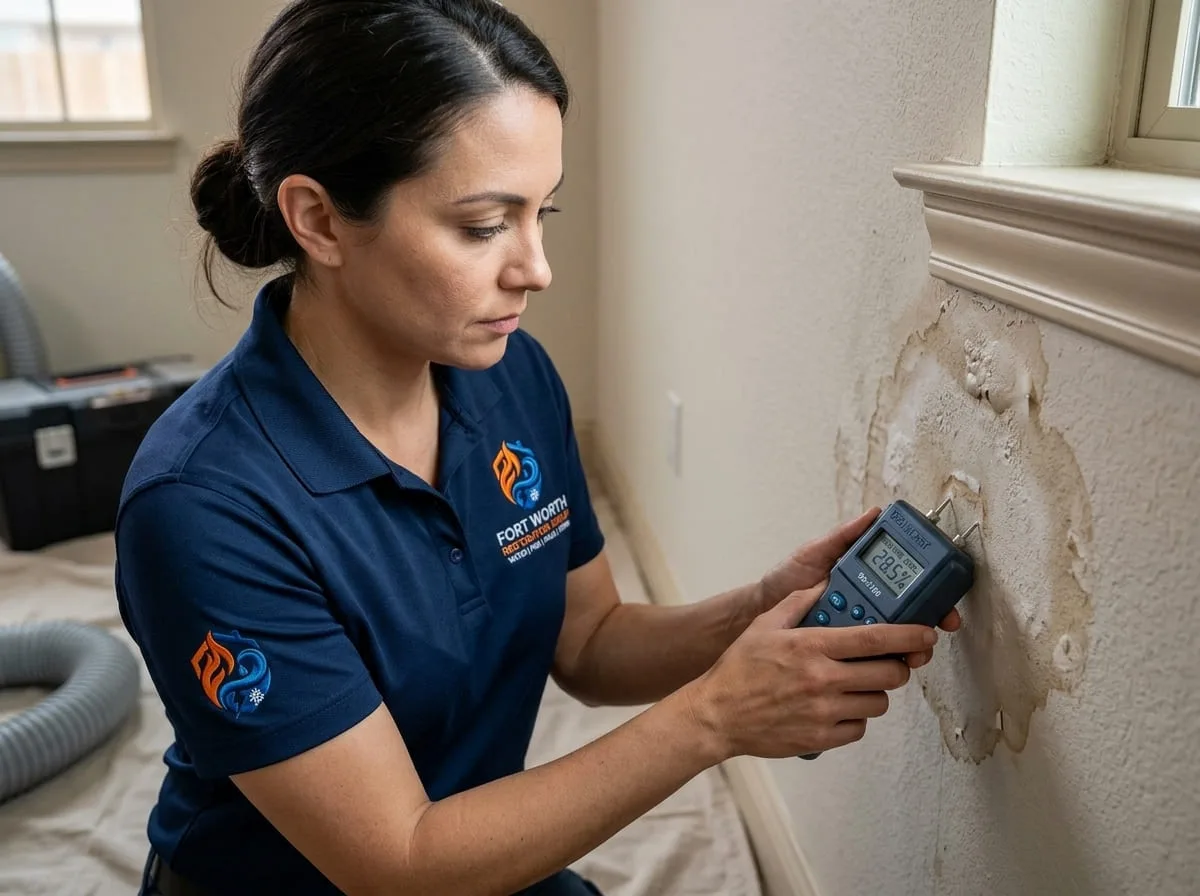
Water damage rarely arrives with an instruction manual. Whether it's a burst pipe at 2 a.m., a slow leak that finally showed itself as a stain on the ceiling, or standing water after a storm, the questions that come up in the moment are usually specific: what do I do right now, how long is this going to take to dry, and is this something I can save myself or something that needs a professional.
This Resource Center is built around those actual questions. Each guide below covers one topic in real depth — the safety considerations, the honest range of outcomes, and where the line usually falls between what can be dried or cleaned and what typically needs to be replaced. Nothing here promises a guaranteed timeline or a guaranteed result, because no two water losses behave exactly the same way.
Fire and mold are included where they genuinely overlap with a water loss, since firefighting water and post-flood moisture are common paths into both. If a guide points toward calling for help, that's because the situation described is one where waiting or handling it alone tends to make things worse, not because every wet spot needs an emergency call.
What to Do Immediately After Finding Water Damage
A safety-first, first-hour checklist covering electrical hazards, stopping the source, and knowing when a call can't wait.
Read more →How Long Does Water Damage Take to Dry?
An honest look at realistic drying ranges, the factors that push a job longer or shorter, and why moisture readings matter more than a calendar.
Read more →Can Wet Drywall Be Saved?
How contamination level, time spent wet, and visible damage determine whether drywall can be dried in place or needs to come out.
Read more →Burst Pipe Cleanup: What to Do Before Crews Arrive
Shutting off the main valve, staying safe around water and electricity, and protecting belongings while help is on the way.
Read more →Water Damage Categories Explained
A homeowner-friendly breakdown of Category 1, 2, and 3 water, and why the classification changes how cleanup is handled.
Read more →Insurance Documentation After Water Damage
What to photograph, save, and track after a loss so a claim has the documentation it needs, without promising a specific outcome.
Read more →Water Damage After Firefighting
What happens to a property after the water used to fight a house fire is still soaking into flooring, drywall, and belongings.
Read more →Hidden Moisture After a House Fire
Why moisture can linger in walls, ceilings, and floors well after the visible fire and smoke damage has been addressed.
Read more →How Quickly Can Mold Become a Concern After Water Damage?
A realistic timeline for mold risk after a leak or flood, and why fast extraction and drying are the most effective prevention.
Read more →Mold Testing After a Water Loss: What the Process Actually Involves
What mold inspection and sampling actually look like after a water event, explained without overstating what testing can prove.
Read more →Dealing With Water Damage Right Now?
These guides are useful for planning, but an active loss needs a faster answer than an article can give.
Need Help Now? Call (682) 610-3848