Can Wet Drywall Be Saved?
Wet drywall isn't automatically ruined, but it isn't always salvageable either. Here's how the call actually gets made.
Last updated 2026-09
Drywall is one of the most common casualties of a water event, and also one of the most misunderstood. It's not automatically ruined the moment it gets wet, but it's not always salvageable either — the answer depends on a handful of specific factors rather than a blanket rule in either direction.
Understanding those factors is useful whether you're waiting on a restoration crew or just trying to figure out what to expect. It also explains why two homeowners with what looks like similar water damage can get different answers about whether their drywall is staying or coming out.
How Drywall Reacts to Water
Drywall is made of gypsum sandwiched between paper facings, and both materials respond to water differently. The paper is what typically fails first — it can develop a musty smell, discoloration, or a soft, bubbling texture well before the gypsum core is structurally compromised. The gypsum core itself can usually tolerate some moisture and dry out without falling apart, but it loses structural integrity if it stays saturated for long enough, becoming soft, swollen, or crumbly.
That's the core tension in every drywall decision: paper problems are often cosmetic and fixable, while a saturated, sagging, or crumbling core generally isn't.
When Drywall Can Usually Be Dried in Place
Drywall has the best chance of being dried and kept when a few conditions line up:
- The water was Category 1 (clean) — from a supply line or similar clean source, not sewage or floodwater
- The drywall was wet for a short period, generally less than 24 to 48 hours, before drying began
- There's no visible sagging, bulging, or crumbling
- The wet area is limited, typically the lower portion of a wall rather than the full sheet
- Drying equipment reaches the area effectively, including behind the wall where relevant
When Drywall Typically Needs to Be Removed
A few situations point clearly toward removal rather than drying:
- The water was Category 2 or 3 (gray or black water) — sewage backups, floodwater, or long-standing gray water carry contamination that drying alone doesn't resolve
- The drywall was saturated for an extended period, often several days or more
- There's visible sagging, bulging, crumbling, or the drywall has separated from the tape at the seams
- Insulation behind the drywall is also wet — wet insulation rarely dries fast enough to save, and it's often removed along with the affected drywall
- Visible mold growth has already developed on or behind the surface
How Professionals Make the Call
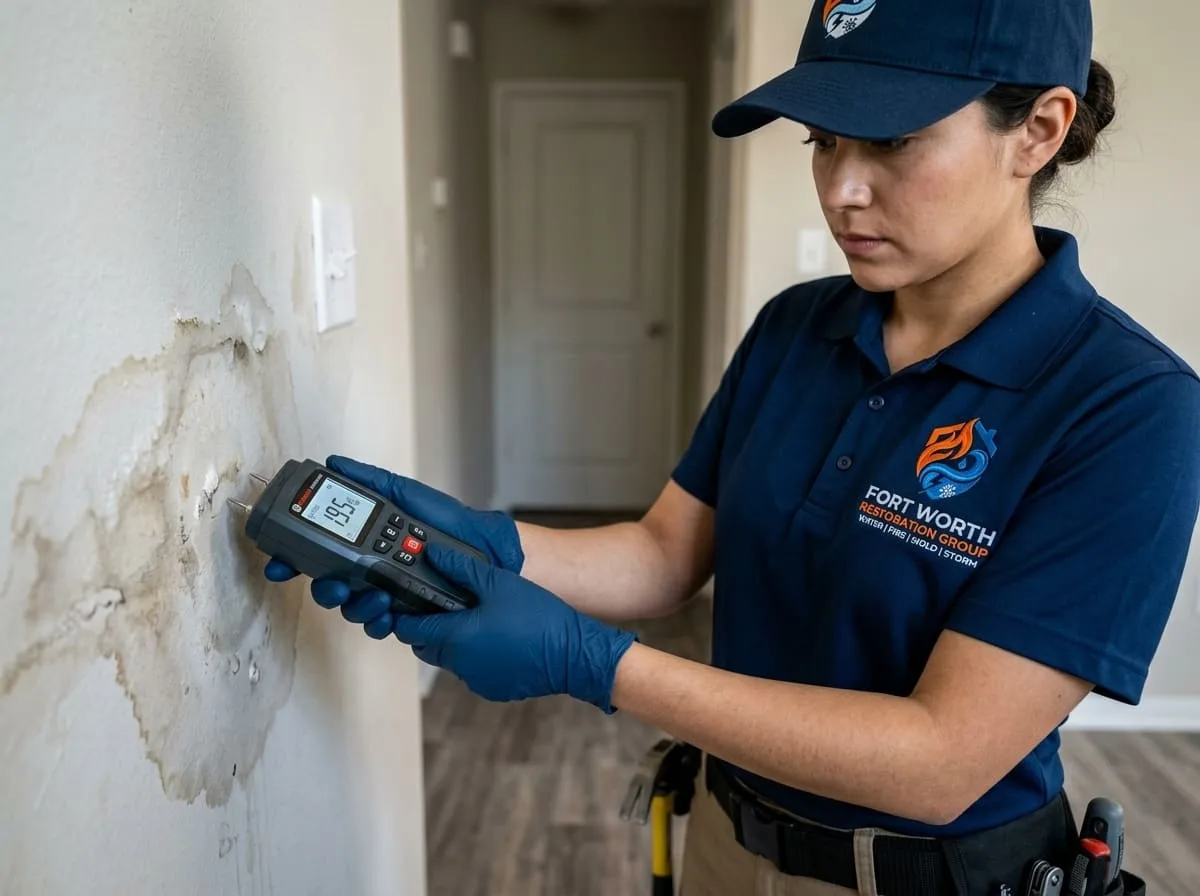
The decision isn't visual guesswork. Moisture meters are used to check how much water the drywall and the framing behind it are actually holding, since a wall can look fine on the painted surface while the material underneath tells a different story. Combined with how long the area was wet and what type of water was involved, that reading is what determines whether drying in place is realistic or whether removal is the more responsible call. Being upfront about that distinction — rather than trying to dry something that was never going to make it — is part of doing the job properly.
What Happens If Wet Drywall Is Left Alone
Drywall that stays wet without any drying intervention is one of the more common paths to a mold problem, since the paper facing is an organic material mold can use as a food source once conditions are right. In a warm, humid climate, that can start happening within a couple of days. Even where the core problem is a moisture issue rather than a health emergency, waiting rarely improves the odds of saving the material — it usually just narrows them.
Frequently Asked Questions
Can wet drywall be dried without cutting it out?
Often, yes, if the water was clean, the area wasn't wet for very long, and there's no sagging or crumbling. A moisture check is the reliable way to confirm it, rather than judging by how the surface looks.
How long can drywall stay wet before it has to be replaced?
There's no exact cutoff that applies to every situation, but drywall that's been saturated for more than a day or two, especially without drying equipment running, has a meaningfully lower chance of being saved. Faster response generally means more options.
Does drywall touched by sewage or floodwater ever get dried instead of replaced?
Generally no. Drywall exposed to Category 2 or 3 water is typically removed regardless of how it looks, because the contamination is in the material itself, not just the moisture, and drying doesn't address that.
How can I tell if drywall behind a wall is wet if I can't see it?
Moisture meters can detect elevated moisture in drywall without needing to cut it open, and infrared cameras can help identify the extent of the wet area. A musty smell or a slightly cool, damp feeling to the wall's surface can also be a clue worth having checked.
Is it safe to cut into wet drywall myself to check for damage?
It's better to leave that to a professional. Cutting into a wet wall can disturb hidden electrical wiring, spread any contamination or early mold growth into the air, and make it harder to assess the full extent of the damage in one pass.
Not Sure If Your Drywall Can Be Saved?
A quick moisture check settles it — waiting only narrows the options.
Call Now for Water Damage Help