How Quickly Can Mold Become a Concern After Water Damage?
A commonly cited 24-to-48-hour guideline explains why speed matters — here's what actually drives the timeline and how to stay ahead of it.
Last updated 2026-09
It's one of the most common questions after a leak, an appliance overflow, or a flooded room: how long do I actually have before this turns into a mold problem? The honest answer is that it depends on several factors, but the general guideline used throughout the restoration industry is that mold growth can begin on wet materials in as little as 24 to 48 hours under favorable conditions. That's a commonly cited general timeframe, not a guarantee or a certified threshold — the real answer depends on humidity, temperature, what got wet, and how much of it stayed wet.
What that timeframe really points to is this: the water itself is the thing to act on immediately. Mold is a downstream consequence of water that wasn't extracted and dried quickly enough, not a separate problem that shows up on its own. This article covers what actually affects how fast mold can develop and why fast water extraction is the most direct way to prevent it from becoming an issue at all.
Where the 24-to-48-Hour Guideline Comes From
Mold spores are present in ordinary indoor and outdoor air essentially everywhere — that's normal and not itself a problem. What turns those spores into active growth is a combination of moisture, a food source, and time. Materials found in almost any home or business — drywall paper, wood framing, carpet backing, insulation, dust — all provide the food source. Once a material is saturated and stays that way, the 24-to-48-hour window is the general range the restoration industry commonly cites for when visible or active growth can begin. It's a useful planning guideline, not a fixed countdown that applies identically to every material and every property.
Factors That Actually Affect the Timeline
Several things speed up or slow down how quickly mold becomes a real concern after water damage:
- Humidity — higher ambient humidity slows evaporation and keeps materials wetter for longer, which shortens the effective timeline
- Temperature — warm conditions generally support faster mold growth than cold ones; a heated or non-air-conditioned space in a Fort Worth summer skews toward the faster end of the range
- Material type — porous materials like drywall, carpet padding, and insulation hold moisture and support growth more readily than non-porous surfaces like tile, glass, or sealed concrete
- How much water was involved — a small, contained spill that's wiped up quickly behaves very differently from standing water that sits for hours
- Airflow and ventilation — a closed-up room with little air movement stays wetter longer than one with good ventilation or mechanical drying already running
- Water source — clean water from a supply line, gray water from an appliance, and contaminated water from sewage or flooding all carry different contamination levels that can affect both the response required and the materials affected
Why Fast Water Extraction Is the Real Prevention Strategy
Since mold requires materials to stay wet, the single most effective way to prevent it is to stop them from staying wet in the first place. Extracting standing water quickly — ideally within hours, not days — removes the bulk of the moisture before it has time to soak deeper into flooring, subfloor, and wall cavities. Structural drying with air movers and dehumidifiers then addresses the moisture that's already been absorbed, bringing materials back to a normal moisture level rather than just an appearance of dryness.
This is why professional water damage response treats speed as a core part of the job rather than a nice-to-have. A property that gets extraction and drying started the same day the water event occurs is in a fundamentally different position than one where water sits untouched for two or three days.
Signs Mold May Already Be Developing
If water has been sitting for more than a day or two — especially somewhere it wasn't immediately noticed, like behind an appliance or under flooring — a few signs suggest mold may already be starting:
- A musty odor that doesn't clear with ventilation
- New discoloration on drywall, baseboards, or ceiling near where the water was
- Soft, bubbling, or bowed drywall or paint
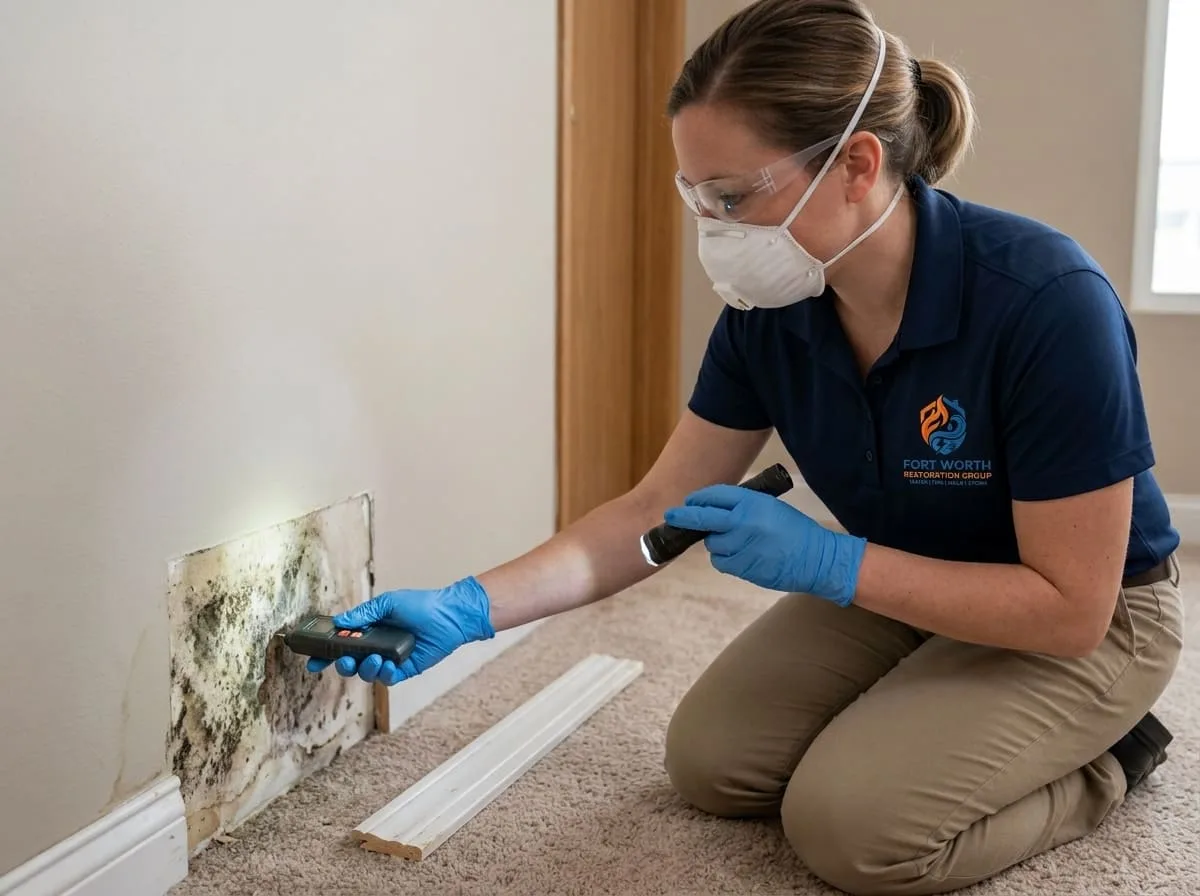
- Visible fuzzy or spotted growth on a previously wet surface
- A return of dampness or smell in an area that seemed to have dried
What This Means If You're Dealing With Water Damage Right Now
If water damage happened recently, the priority is getting extraction started as soon as possible, not waiting to see whether a mold problem develops. Standing water should be removed, wet materials should be dried with proper equipment rather than left to air-dry on their own, and any area that stayed wet for more than a day or two is worth a closer look even if nothing is visible yet. The water hub covers the full extraction and drying process this depends on, and it's the page to start with if water damage is still an active problem.
Frequently Asked Questions
Is 24 to 48 hours a guarantee that mold will grow?
No. It's a commonly cited general industry guideline for how quickly mold growth can begin under favorable conditions, not a fixed or certified timeline. Actual timing depends on humidity, temperature, material type, and how much water was involved.
If I dry the area myself with fans, does that stop mold from starting?
It can help, but household fans alone often aren't enough to fully dry materials that absorbed water, like carpet padding or the inside of a wall. Surface-dry doesn't always mean the material underneath has reached a safe moisture level.
Does the type of water matter for mold risk?
Yes. Clean water from a supply line, gray water from an appliance, and contaminated water from sewage or flooding all carry different levels of contamination, which can affect both how quickly problems develop and what needs to be done with affected materials.
How do I know if mold has already started versus if I still have time?
A musty smell, new discoloration, or soft and bubbling drywall near a water event are signs mold may already be present. If none of those are showing and the water is recent, fast extraction and drying is still the best way to prevent it.
Does Fort Worth's climate make this worse?
Warm, humid stretches — common in a Fort Worth summer — slow natural evaporation and can push conditions toward the faster end of the general mold timeline, which is part of why mechanical drying rather than just open windows matters here.
The Fastest Way to Prevent Mold Is to Deal With the Water
Getting standing water extracted and materials properly dried is the most reliable way to keep a water event from becoming a mold problem.
Get Emergency Water Removal