Mold Testing After a Water Loss: What the Process Actually Involves
Testing isn't always the right move after a water loss — here's what inspection and sampling actually involve, and when to skip straight to remediation.
Last updated 2026-09
After a leak, flood, or slow-drying water event, it's a natural question: should this get tested for mold? The honest answer is that testing is useful in some situations and unnecessary in others, and understanding the difference can save time and money. This article walks through what mold testing after a water loss actually involves — visual inspection, air and surface sampling — and when it genuinely adds value versus when visible mold can just be addressed directly.
None of this replaces dealing with the water itself. Testing is a tool for figuring out the scope of a mold question; it doesn't extract water or dry a structure, and in most cases the water damage response should happen regardless of whether testing is done.
When Testing Makes Sense After a Water Loss
Testing tends to add real value in a specific set of situations: a musty smell with no visible source, a water event that happened out of sight — behind a wall, under flooring, above a ceiling — where it's unclear whether mold followed, a property changing hands where documentation matters to a buyer or seller, or confirming a space is back within a normal range after remediation is complete. In these cases, sampling gives an objective data point where a visual inspection alone can't answer the question.
When Visible Mold Can Just Be Addressed Directly
If mold is already visible and the moisture source is identified, testing often isn't necessary before remediation begins. The presence of visible growth is the information testing would otherwise be trying to confirm, and skipping straight to containment, removal, and cleaning avoids paying for a test that would likely just confirm what's already known. Testing after the fact — as part of clearance — can still be useful in that scenario to help confirm the space is back within a normal range once the work is done.
The Inspection Comes First
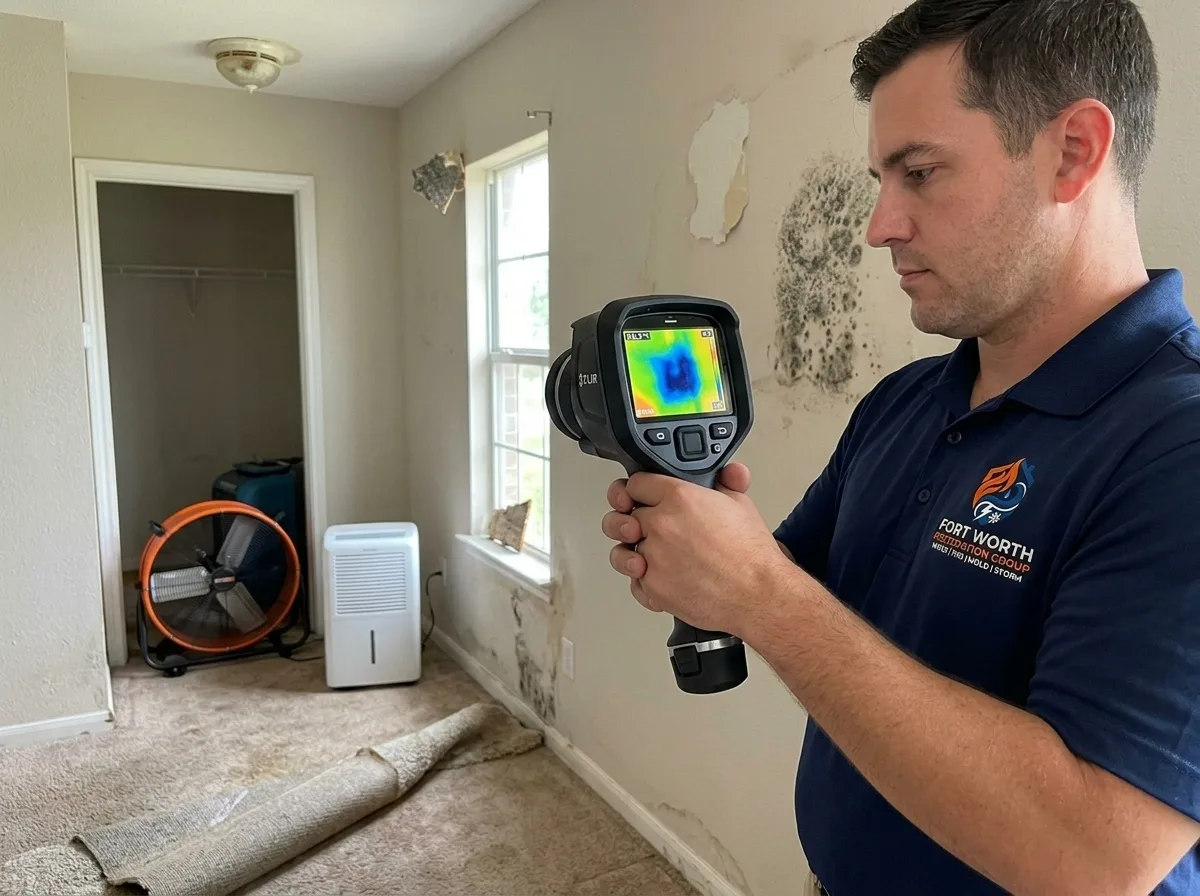
Testing on its own, without an inspection, isn't typically how the process works. A visual and moisture inspection usually comes first — checking the extent of the original water event, looking for signs of growth, and using moisture meters to identify areas that may still be wet. The inspection identifies where sampling would actually add useful information, rather than sampling being done broadly without a reason.
Air Sampling
Air sampling collects a measured volume of indoor air, which is analyzed to identify what's present and at what relative level. The result is compared against a sample taken from outdoor air or an unaffected part of the same property, which gives a baseline for what's typical versus elevated in that specific location. Air sampling is most useful for a suspected problem without visible growth — inside a wall cavity, above a ceiling, or in ductwork, for example — where there's no surface to swab directly.
Surface Sampling
Surface sampling — typically a swab or tape lift taken from a specific spot — identifies what's actually growing on that surface. It's useful for confirming that a visible spot is mold rather than another type of staining or discoloration, or for distinguishing between different areas of growth found during an inspection.
How Samples Are Analyzed
Samples are generally sent out to an independent laboratory for analysis rather than evaluated on-site, which keeps the testing separate from any remediation decision. Turnaround time varies depending on the lab and how the sample was submitted, so it's worth asking about the expected timeline whenever a sample is collected. Consistent sample collection procedures matter here, since results are only meaningful when they can be fairly compared against a baseline.
What Results Do and Don't Tell You
A lab result describes what was found in that specific sample and how it compares to the baseline — it's one input into a decision, not a stand-alone verdict on its own. The physical inspection findings, the extent of any visible growth, and the moisture source all factor in alongside the lab data. A single clean air sample, for example, reflects conditions in one location at one moment; it's typically interpreted together with the rest of the inspection rather than treated as a final answer by itself.
Testing Before vs. After Remediation
Testing before work begins helps establish a baseline and confirm the scope of a job when there's uncertainty about what's present. Testing after remediation is used as part of clearance, to help confirm a space is back within a normal range before it's reopened or repairs continue. The two serve different purposes even though the sampling methods are similar.
Frequently Asked Questions
Do I need mold testing if I can already see mold after a water loss?
Not usually. If mold is visible and the moisture source is identified, remediation can typically proceed without pre-work testing. Testing adds the most value when there's no visible growth but a suspected problem, or when documentation is needed.
What's the difference between air sampling and surface sampling?
Air sampling collects a volume of indoor air to check for elevated levels compared to a baseline, and is useful when a problem is suspected but not visible. Surface sampling swabs a specific spot to confirm whether what's visible there is actually mold.
Can I use a mold test kit from a hardware store instead?
Consumer kits can detect mold spores, but spores are present in ordinary air almost everywhere, including in a normal, unaffected home. Without a proper baseline comparison and professional interpretation, the results can be difficult to act on.
How long does it take to get mold testing results?
It varies by laboratory and how the sample was submitted, so it's worth asking about the expected turnaround at the time a sample is collected rather than assuming a fixed timeline.
Does a clean test mean there's no mold problem at all?
Not necessarily on its own. A sample reflects conditions in a specific location at a specific time and is generally interpreted together with the physical inspection rather than as a stand-alone answer.
Not Sure If Testing Is the Right Step?
An inspection first will tell you whether sampling actually adds useful information for your situation.
Request Water Damage Service