
How Long Does Water Damage Take to Dry?
Drying time depends on real, specific factors — not a fixed number of days. Here's what actually determines the timeline.
Last updated 2026-09
It's one of the first questions almost everyone asks after a leak or a flood: how long until this is actually dry? It's a fair question, and it deserves an honest answer rather than a made-up number. The truth is that drying time depends on several variables specific to the loss, and any restoration company promising an exact timeline before assessing the property is guessing.
What follows is a realistic look at the ranges involved, the factors that push a dry-out toward the shorter or longer end, and why the finish line is a set of moisture readings rather than a date on a calendar.
Why There's No Single Answer
A small, contained leak caught within an hour and a flooded room with water that sat overnight are not the same job, even if both are technically "water damage." Drying time is a function of how much water was involved, what it touched, how long it had to soak in before drying started, and the conditions in the space while drying equipment runs. Two homes with what looks like the same amount of water can dry at noticeably different rates depending on those factors.
Factors That Affect Drying Time
A few variables consistently make the biggest difference:
- Material type — tile and sealed concrete dry faster than drywall, and drywall dries faster than solid wood subfloor or dense wood framing
- How long the water sat before extraction and drying began — water that sat for a day behaves very differently than water caught within the hour
- Extent of the affected area — a single wet corner dries faster than a fully saturated room, simply because there's more moisture to remove
- Ambient humidity — Fort Worth's long, humid summer stretches slow natural evaporation and make mechanical dehumidification more important, not less
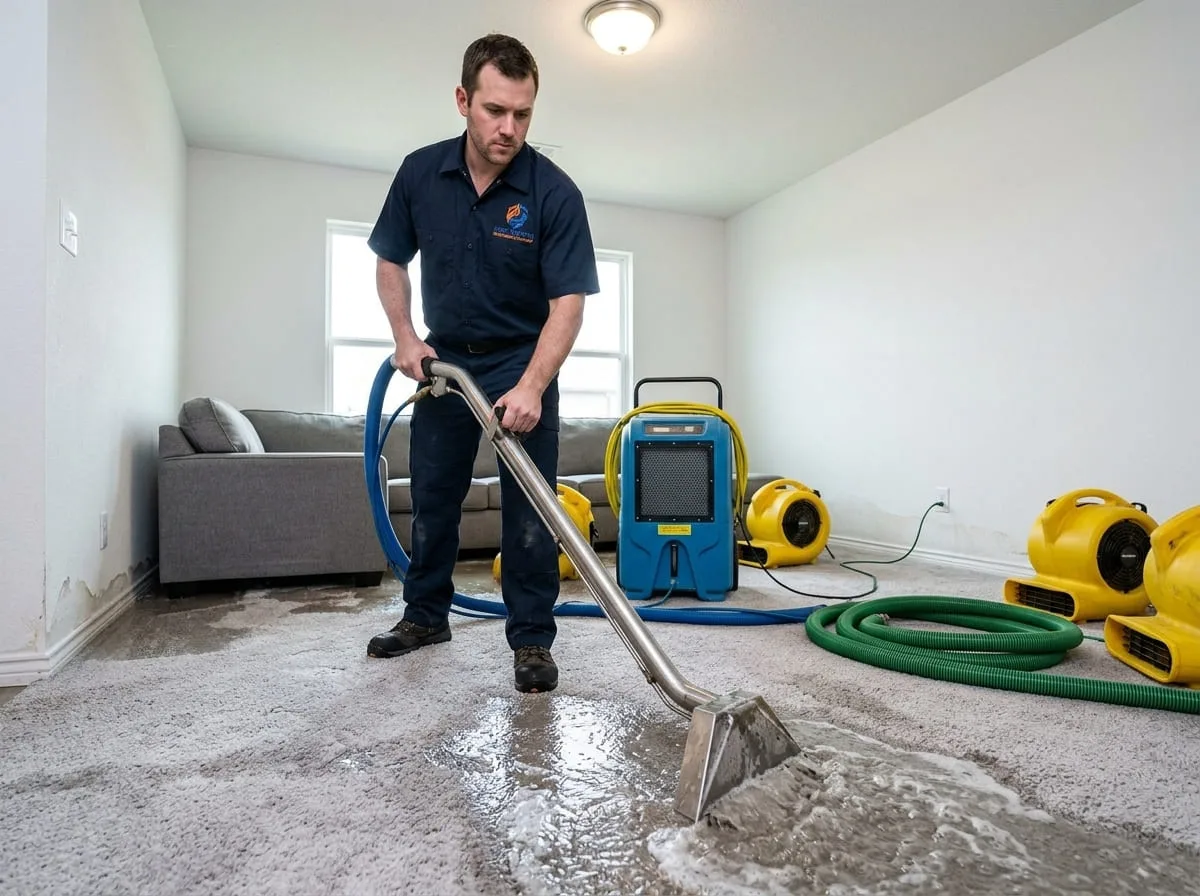
- Airflow and equipment placement — air movers and dehumidifiers have to be positioned correctly and run continuously to work as intended
- Whether cavities are involved — water trapped inside a wall or under flooring takes longer to reach and dry than a fully exposed surface
Typical Timelines — and Why They're a Starting Point, Not a Promise
For a contained residential water loss with a fast response, a few days of continuous air movement and dehumidification is common before materials reach an acceptable moisture level. Larger losses, water that sat for an extended period before being addressed, or situations involving wall cavities and subfloor can extend that well beyond a week. Commercial spaces with larger open areas or specialized flooring can run longer still.
Those ranges are useful for setting expectations, but they're not a guarantee for any individual property. The only way to know a specific space is actually dry is to measure it — which is the next point.
Why Professional Moisture Monitoring Matters
A room can look and feel dry well before it actually is. Paint can appear normal while the drywall behind it still holds moisture; carpet can feel dry on top while the padding underneath stays saturated for days. Restoration professionals use moisture meters, and sometimes infrared cameras, to track actual moisture content in materials over the course of the drying process and compare it to an unaffected part of the same property. Drying is considered complete when those readings come back in line — not on a fixed schedule, and not based on how a space looks or smells.
Stopping equipment early because a space "seems dry" is one of the most common ways a water loss turns into a mold problem weeks later. The monitoring step is what closes that gap.
Signs a Space Isn't Fully Dry Yet
- A cool, slightly damp feeling to flooring or drywall
- A faint musty smell that lingers after visible water is gone
- Discoloration or a soft, bubbling texture in paint or wallpaper
- Baseboards that feel soft or have started separating from the wall
- A room that feels noticeably more humid than the rest of the property
Frequently Asked Questions
Can water damage dry on its own without equipment?
A very small, contained spill might dry naturally with good ventilation, but most water damage involves moisture that's soaked into carpet, drywall, or subfloor faster than normal air circulation can remove it. Left to dry on its own, materials often stay damp long enough to develop mold, even if the surface looks fine.
Does opening windows help speed up drying?
It depends on the weather. In dry conditions, some airflow can help. During Fort Worth's humid stretches, opening windows can actually add moisture to the air rather than remove it, which is part of why dehumidifiers — not just fans — are a standard part of professional drying.
How do professionals know when something is actually dry?
Moisture meters measure the moisture content of a material and compare it to an unaffected area of the same property. A material is considered dry when those readings match, not simply when it looks or feels dry to the touch.
What happens if drying stops too early?
Trapped moisture that's never fully removed creates the conditions mold needs to grow, sometimes appearing weeks after the original water event seemed resolved. It can also lead to warping, swelling, or continued deterioration of materials that looked fine at first glance.
Does the type of water affect how long drying takes?
It can affect the process more than the raw timeline. Contaminated water (from sewage or floodwater, for example) often requires removing porous materials rather than drying them in place, which changes the scope of work even if the drying phase itself is similar for what remains.
Don't Guess at Whether It's Dry
A space that looks dry can still hold enough moisture to cause mold and warping weeks later — get it measured, not guessed.
Speak With a Restoration Team