Fire Damage Restoration in Fort Worth, TX
24/7 emergency response for house and business fires across Fort Worth and Tarrant County — from board-up and smoke cleanup through full reconstruction.
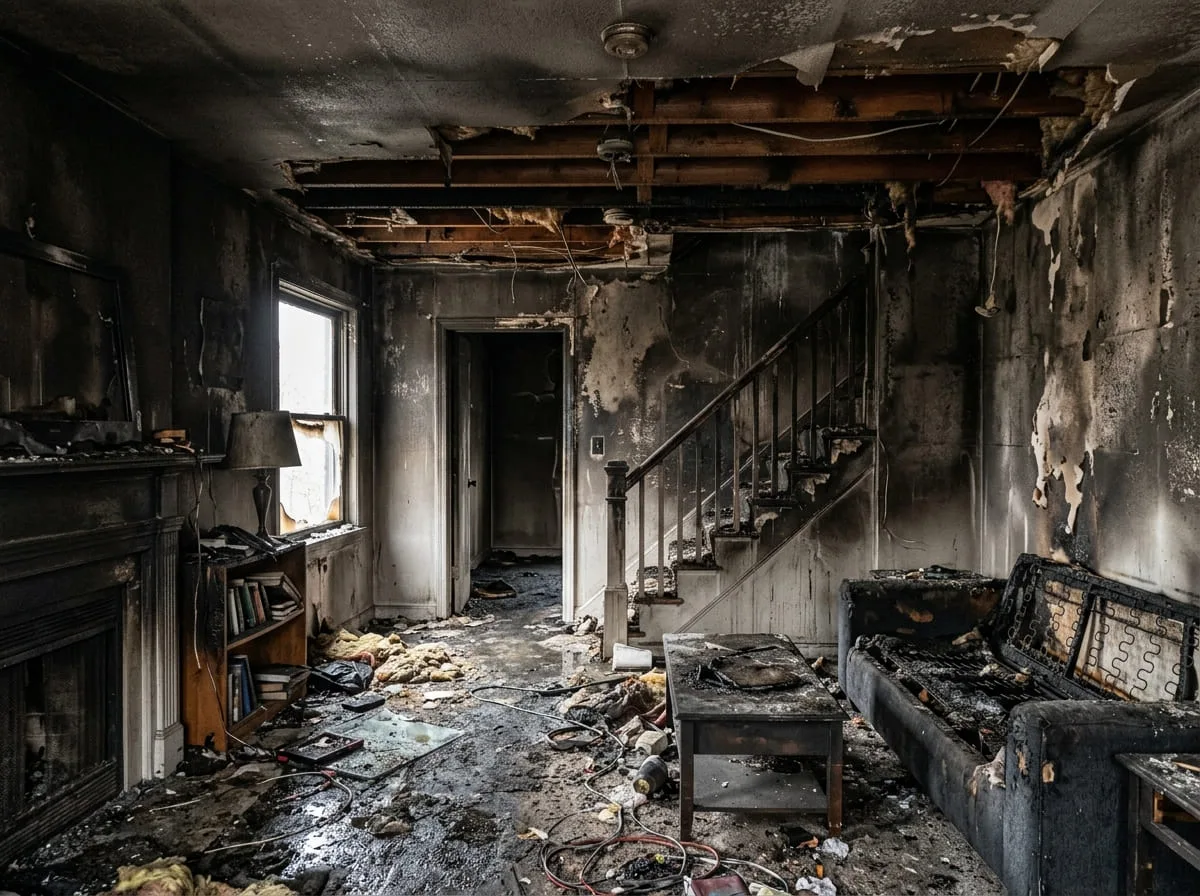
A structure fire doesn't stop causing damage once the flames are out. Smoke travels through HVAC systems and wall cavities long after a fire is extinguished, soot etches into porous surfaces within hours, and the water used to fight the fire is often as destructive as the fire itself. What happens in the first 24 to 48 hours has a real effect on what can be cleaned, what has to be replaced, and how long a property stays out of use.
Fort Worth Restoration Group routes fire damage calls to restoration professionals serving Fort Worth and Tarrant County around the clock, including nights, weekends and holidays. Every fire loss is different — a contained kitchen fire behaves nothing like a fire that moved through an attic or a multi-unit commercial building — so the response is built around the specific property, not a fixed script.
The pages below cover the full scope of fire recovery, from the emergency board-up that secures a property the same day, through smoke and soot cleanup, contents pack-out, and the structural repairs that bring a property back to a livable or operational condition.
Fire Damage Restoration in Fort Worth, TX Services
Emergency Fire Damage Restoration
Round-the-clock response to secure the property, assess the damage and stop it from getting worse in the first critical hours.
Learn more →Smoke Damage Cleanup
Removing smoke residue and staining from walls, ceilings, HVAC systems and belongings before it sets permanently.
Learn more →Soot Removal
Safe removal of acidic soot deposits from surfaces, fabrics and hard-to-reach cavities.
Learn more →Smoke Odor Removal & Deodorization
Source-based odor treatment using professional equipment, not air fresheners or masking sprays.
Learn more →Firefighting Water Damage Cleanup
Extracting and drying the water used to put the fire out, before it becomes a second loss.
Learn more →Commercial Fire Damage Restoration
Fire recovery scaled for retail spaces, offices, warehouses and multi-tenant buildings, with an eye on getting the business back open.
Learn more →Emergency Board-Up & Tarping
Same-day securing of broken windows, damaged roofs and exposed openings against weather and intrusion.
Learn more →Contents Cleaning & Pack-Out
Inventory, cleaning and secure storage of salvageable belongings while repairs are underway.
Learn more →Fire Damage Repairs & Reconstruction
Structural rebuild from framing to finishes, carried out under a general contractor licence.
Learn more →What a Fire Damage Call Covers
Fire damage restoration is rarely a single task. A typical loss involves securing the structure, addressing water used during suppression, removing soot and smoke residue, treating odor at its source rather than masking it, and coordinating with the property owner's insurance adjuster on documentation. Restoration professionals scope each of these separately because they require different equipment, different chemistry and often different timing.
Every call is routed to restoration professionals who are licensed, insured and IICRC-certified for fire and smoke recovery work, so the technical side of the job — moisture readings, soot chemistry, odor treatment — is handled by people trained specifically for it.
- Emergency board-up and roof tarping to stop weather and secondary damage
- Extraction of firefighting water and moisture mapping behind walls and under flooring
- Soot and smoke residue removal from structural surfaces
- Odor neutralization using equipment matched to the type of smoke involved
- Contents cleaning, inventory and pack-out for salvageable belongings
- Structural repairs and reconstruction back to pre-loss condition
Board-Up Through Reconstruction, Handled as One Project
Emergency board-up and tarping, contents pack-out, and full fire damage reconstruction are delivered on every fire call — not offered as an add-on that requires a second search and a second phone call. The receiving contractor holds a general contractor licence, which means the same point of contact that secures the property the night of the fire can also carry the repair through drywall, paint, flooring and trim once mitigation is complete.
That continuity matters for insurance claims. A single contractor managing both mitigation and reconstruction produces one consistent set of documentation for the adjuster, rather than conflicting scopes from two separate companies.
Insurance Claim Assistance
Insurance claim assistance is available through the receiving contractor on every fire loss. That typically includes photo and moisture documentation at each stage, a written scope of work, and direct communication with the assigned adjuster so the property owner isn't relaying technical details back and forth. This support doesn't replace the homeowner's own policy obligations — it's there to keep the claim moving and the documentation accurate.
Property owners should still contact their insurance carrier as soon as it's safe to do so, since most policies require prompt notice of loss.
Related restoration services
- Water Damage Restoration in Fort Worth — Suppression water often reaches rooms the fire never touched, and that water needs prompt extraction just like any other water loss.
- Structural Drying & Dehumidification — Full structural drying after a fire protects framing, subfloor and drywall that survived the flames but not the water used to put it out.
- Mold Remediation — Moisture trapped behind walls and under flooring after firefighting can turn into a mold problem within 24 to 48 hours if it isn't fully dried.
Serving Fort Worth & Nearby Communities
Frequently Asked Questions
Is it safe to go back into a house after a fire?
Not until the fire department or a qualified inspector confirms the structure is safe. Fires can compromise roof framing, floor joists and electrical systems in ways that aren't visible from a walkthrough. Wait for clearance before re-entering, and even then avoid rooms with visible structural damage, sagging ceilings or exposed wiring.
How quickly should fire damage restoration start?
As soon as the property is cleared for entry. Soot is acidic and continues etching into metal, grout and finishes the longer it sits, and smoke odor becomes harder to remove the deeper it penetrates porous materials like drywall and upholstery. Same-day board-up and an early assessment generally lead to a better outcome than waiting.
Does homeowners insurance cover fire damage restoration?
Most homeowners and commercial property policies cover fire damage, though coverage details and depreciation schedules vary by policy. Restoration professionals can document the loss and work directly with the assigned adjuster, but the specifics of coverage are between the property owner and their insurance carrier.
Can smoke odor really be removed, or does it just get covered up?
Genuine odor removal targets the source — residue trapped in porous materials, HVAC ductwork and wall cavities — using equipment like thermal foggers, ozone generators or hydroxyl generators rather than fragrance sprays that only mask the smell temporarily. Some heavily saturated materials, like insulation or certain fabrics, may need to be removed rather than deodorized.
What should I do in the first hour after a fire is out?
Once the fire department confirms it's safe, avoid touching soot-covered surfaces with bare hands, don't turn on the HVAC system (it spreads soot through the ductwork), and don't attempt to clean anything with household products, which can permanently set smoke stains. Contact the restoration professionals and the insurance carrier, and photograph visible damage if it's safe to do so.
Fire Damage Doesn't Wait — Neither Should the Call
Restoration professionals serving Fort Worth and Tarrant County are available 24/7 to secure the property and start the recovery process.
Speak With a Restoration Team