
Hidden Moisture After a House Fire
Firefighting water rarely stays where you can see it — here's where it hides and why it needs to be found before reconstruction starts.
Last updated 2026-09
After a house fire, the obvious damage is easy to see: charred framing, blackened walls, soot on every surface. What's much harder to see is where the water from fighting the fire actually ended up. Hose streams and sprinkler discharge don't stay on the surface — they soak into drywall, run behind baseboards, pool under flooring, and travel through ceiling cavities into rooms and floors the fire itself never touched.
That water doesn't announce itself the way fire damage does. It can sit inside a wall or under a floor for days without a visible sign, and by the time it shows up as a musty smell, a stain, or bubbling paint, it's already been there long enough to cause secondary damage — or start supporting mold growth. This article covers where that moisture tends to hide, why it's easy to miss, and what it means if it isn't found and dried.
Why Moisture Gets Trapped and Missed
Firefighting creates a lot of water in a short amount of time, and the priority during and immediately after a fire is understandably the fire itself — making sure it's fully out, checking for structural safety, and assessing what burned. Water that soaked into a wall cavity or under a floor during that process is easy to overlook next to more visible fire and smoke damage, especially in rooms that look untouched by the fire.
It also travels in ways that aren't intuitive. Water follows gravity and gaps, not the shape of the fire damage. A fire on an upper floor can leave water pooling in a ceiling cavity or dripping into the room below for hours after the fire is out, and by the time it's noticed, the moisture has often already spread further than the wet spot on the ceiling suggests.
Common Places Moisture Hides After a Fire
A few locations account for most of the hidden moisture found after a house fire:
- Behind drywall and baseboards where water ran down inside a wall cavity
- Under carpet, padding, and hardwood or laminate flooring
- Inside ceiling assemblies, especially below a room where a fire or sprinkler was active on the floor above
- Around window and door frames where water pooled during firefighting
- Inside closets, cabinetry, and built-ins adjacent to the fire area
- In insulation, where trapped moisture can persist long after surrounding materials feel dry
Why It Doesn't Just Dry on Its Own
A house that's closed up after a fire — windows boarded, HVAC off, doors sealed for security — doesn't have much natural airflow to help water evaporate. Materials that would dry out reasonably quickly in a well-ventilated space can stay wet for much longer inside a closed, undisturbed structure. That's exactly the setup a lot of fire-damaged homes are left in while insurance, board-up, and reconstruction planning take place, which gives trapped moisture time to do more damage than it otherwise would.
The Mold Risk Behind Unaddressed Moisture
Moisture that sits inside a wall cavity or under flooring for an extended period, particularly in Fort Worth's warm, humid stretches, creates the conditions mold needs to start growing: moisture, an organic surface like drywall paper or wood framing, and time. Because this water is hidden by definition, it's common for mold to be discovered only when a musty odor develops or when reconstruction work opens up a wall and finds discoloration and growth that wasn't visible from the outside. Addressing the moisture early, before reconstruction begins, is the more direct way to avoid that outcome — see the mold after water damage page for how that connection is typically handled when mold has already developed.
How Hidden Moisture Is Actually Found
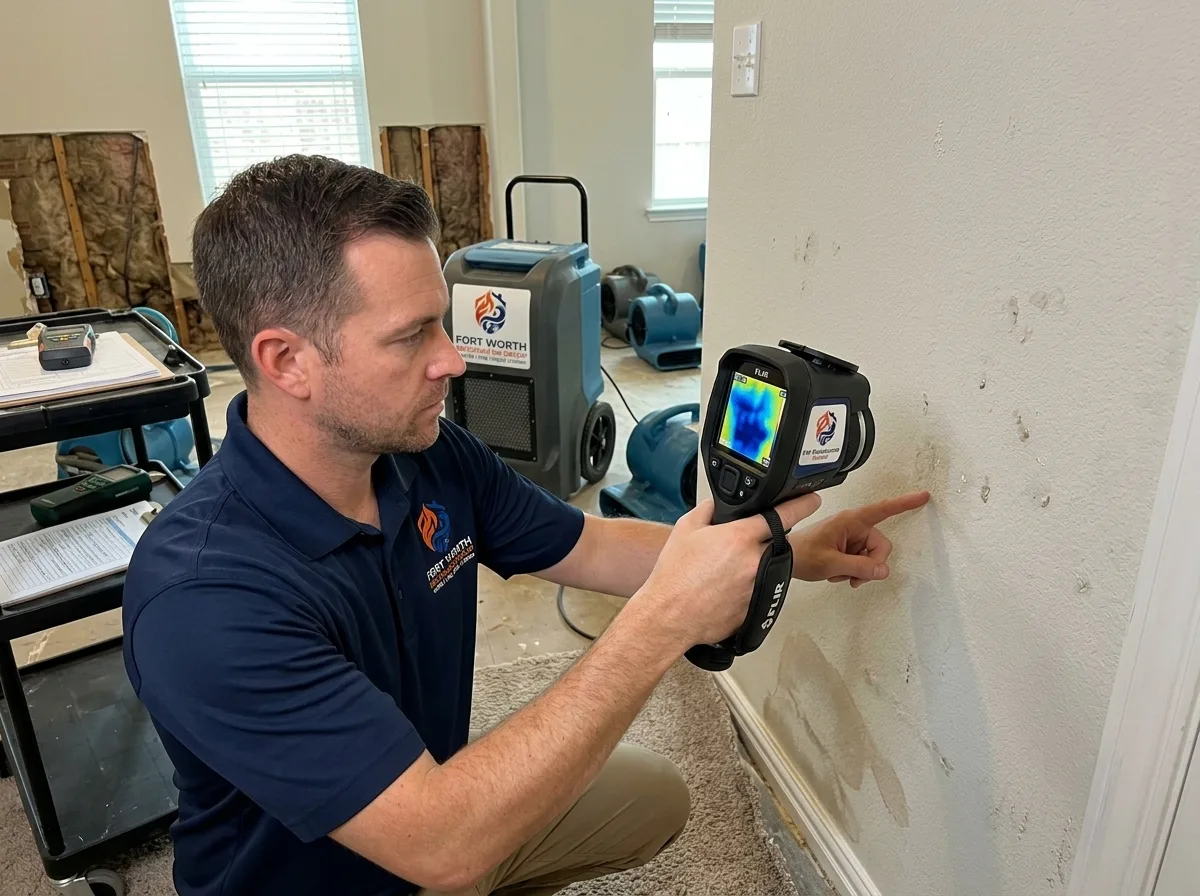
Visual inspection alone won't catch most of this. Moisture meters measure the actual water content inside building materials, not just what's visible on the surface, and infrared cameras can help identify temperature differences that point to wet areas behind a wall or under a floor before any cutting or removal happens. A thorough post-fire assessment maps moisture through the whole structure, including rooms that look unaffected by the fire, rather than stopping at the edge of the visible fire damage.
What This Means for the Restoration Timeline
Finding and drying hidden moisture is not a step that can be skipped or rushed to get to reconstruction faster. Rebuilding over a wall or subfloor that's still holding moisture just traps the problem behind new materials, where it's harder and more expensive to address later. A proper sequence extracts and dries the structure first, confirms moisture levels are back to normal with meter readings, and only then moves into repairs and reconstruction.
Frequently Asked Questions
How do I know if there's hidden moisture after a house fire?
Signs include a musty smell, discoloration on walls or ceilings away from the visible fire damage, soft or spongy flooring, and paint or drywall that's started to bubble. A moisture meter reading is the reliable way to confirm what isn't visible.
Can hidden moisture cause problems even in rooms the fire didn't reach?
Yes. Firefighting water travels through ceiling cavities, along framing, and down through floors, so it's common for water damage to show up in rooms and even floors away from where the fire actually burned.
How long can moisture sit before it becomes a mold concern?
As a commonly cited general guideline, mold growth can begin within roughly 24 to 48 hours under warm, humid conditions with materials that stay wet. A house closed up after a fire, with little airflow, doesn't dry on its own the way an open, ventilated space would.
Should reconstruction start before moisture is checked?
No. Rebuilding over a wall or floor that's still wet traps the moisture behind new materials rather than resolving it. Moisture should be found and dried, with readings confirming it's back to normal, before reconstruction begins.
Is this covered by insurance along with the fire damage?
Water damage that results directly from firefighting is generally covered under the same claim as the fire, since it's a consequence of the same covered event. Documentation of the moisture and the drying process helps support that part of the claim.
Moisture You Can't See Still Needs to Be Found
A full moisture assessment after a fire covers the whole structure, not just the rooms that burned.
Speak With a Restoration Team