Smoke Odor Removal & Deodorization in Fort Worth, TX
Odor that's masked always comes back — treatment that targets the source is the only way to actually get rid of it.
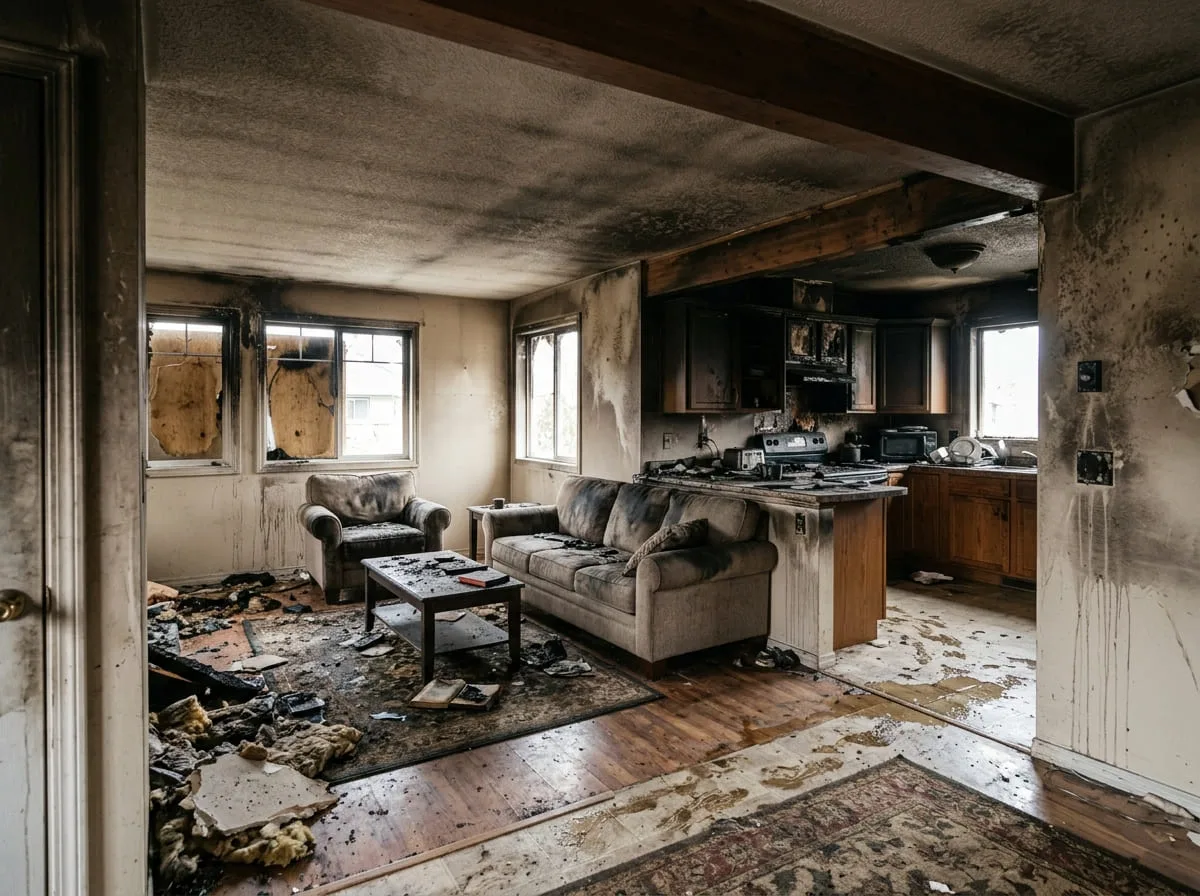
Smoke odor isn't a surface problem. The compounds that cause it work into drywall, insulation, subflooring, HVAC ductwork and fabric fibers, which is why air fresheners, candles and a hardware-store ozone unit rarely solve it for more than a day or two. Getting rid of smoke odor for good means finding where it's actually trapped and treating that, not covering it with a stronger smell.
This is one of the more technical parts of fire recovery, and it's also one of the easiest to get wrong. Treating odor before the source material is properly cleaned or removed just delays the smell coming back.
Why Smoke Odor Lingers
Smoke particles are small enough to work into porous materials — drywall, wood, carpet padding, insulation, upholstery — well below the surface. Heat also drives smoke odor into wall cavities and ductwork that were never directly exposed to flame. A room can look completely clean and still carry a strong smoke smell because the source is inside the materials, not on top of them.
How Professional Deodorization Works
Odor removal is performed by restoration partners trained in fire and smoke restoration techniques, not air fresheners and guesswork.
- Identifying and removing or cleaning the materials actually holding the odor, since treating around a saturated material rarely works
- Thermal fogging, which uses heated deodorizing agents to penetrate the same paths smoke took into a material
- Ozone treatment, used in unoccupied spaces to break down odor-causing compounds
- Hydroxyl generators, a slower but occupant-safe alternative to ozone for spaces that need to stay in use
- HVAC cleaning, since ductwork left untreated will keep reintroducing odor every time the system runs
What Doesn't Actually Work
Air fresheners, scented candles and most consumer ozone machines mask odor temporarily at best and don't address the source. In some cases they make the underlying problem harder to diagnose, since the smell fades in one spot while the actual source material is still saturated. Painting over odor-affected drywall without sealing or treating it first is another common shortcut that tends to fail within weeks.
Residential and Commercial Odor Treatment
Homes typically need targeted treatment in the rooms nearest the fire plus an HVAC pass if the system was exposed. Commercial spaces — restaurants, retail, offices — often need faster turnaround since odor lingering after reopening affects customers and staff, and larger HVAC systems mean odor can be more widely distributed before it's addressed.
Frequently Asked Questions
How long does smoke odor removal take?
It depends on how far the odor traveled and which materials absorbed it. A single room with limited penetration might be treated in a day; a property-wide odor problem involving HVAC and multiple porous materials takes longer to fully resolve.
Will painting over smoke odor make it go away?
Not on its own. If the odor source underneath isn't cleaned or sealed first, it typically works back through new paint within weeks. Odor treatment should happen before, not instead of, repainting.
Is ozone treatment safe to use in an occupied home?
No — ozone treatment is done in unoccupied spaces, since ozone itself is not safe to breathe at the concentrations used for odor treatment. Hydroxyl generators are a common alternative when a space needs to remain occupied during treatment.
Can smoke odor come back after treatment?
If the source material was fully treated or removed, odor generally doesn't return. If a shortcut was taken — masking instead of treating, or missing a saturated material behind a wall — odor can resurface, especially with humidity changes.
Related services
Nearby service areas
Get Rid of the Smell for Good
Masking smoke odor never lasts — restoration professionals treat the source and are available 24/7 for fire-affected properties.
Speak With a Restoration Team