Structural Drying & Dehumidification
Getting standing water out of a property is only half the job — drying it correctly is what actually prevents mold, warping, and repeat damage.
Extraction removes the water sitting on a surface. It doesn't remove the water that's already soaked into drywall, framing, subfloor, or insulation — and that trapped moisture is what causes the lasting damage most people associate with a water loss: warped flooring, sagging drywall, and eventually mold. Structural drying is the phase that addresses it, and it's arguably the part of the process where the outcome is decided.
Our restoration partners follow recognized industry standards for how drying is measured and verified, rather than treating a space as dry once it looks and feels dry to the touch — a standard that matters more in Fort Worth's climate than in most of the country.
How Structural Drying Works
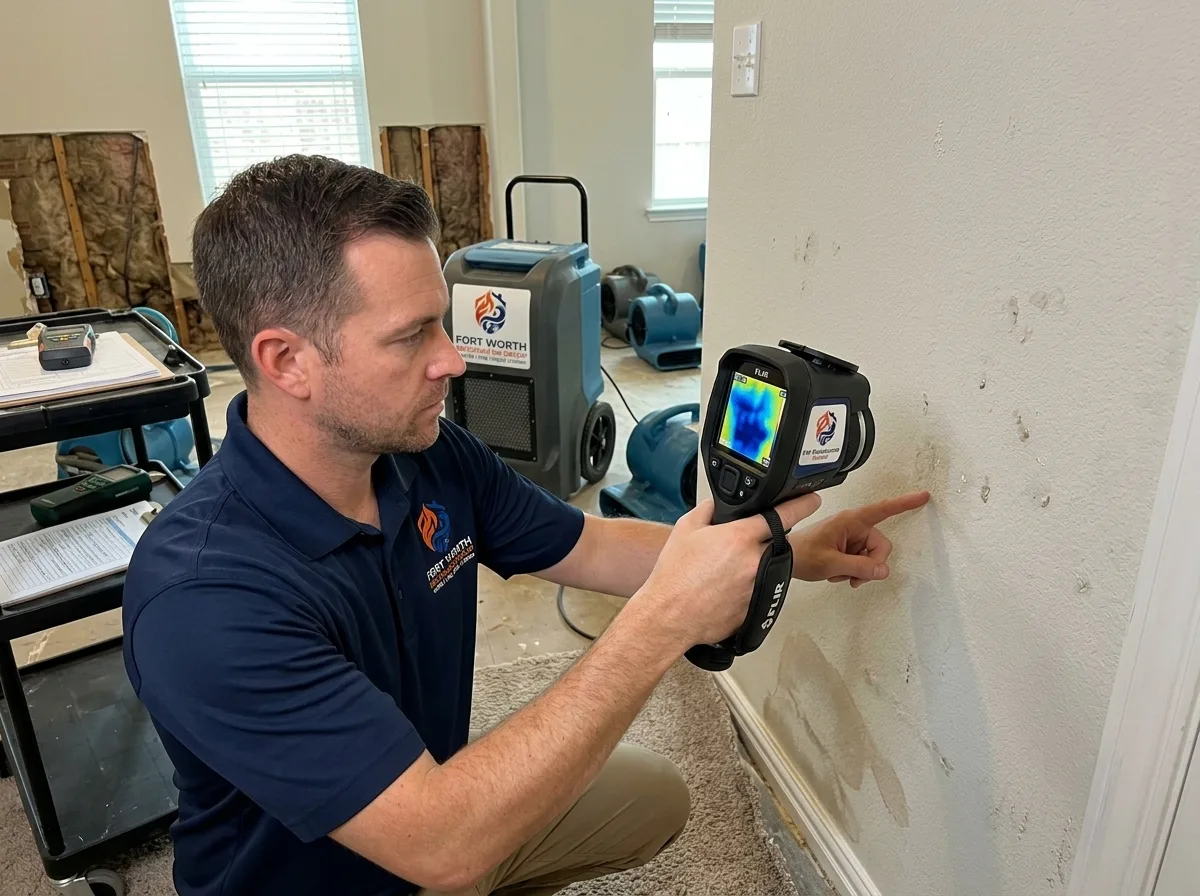
Drying starts with moisture mapping — using meters and, where useful, infrared cameras to identify exactly which materials are wet and how far the water has traveled, since visible damage rarely marks the true boundary. Air movers are then positioned to accelerate evaporation from wet surfaces, while dehumidifiers pull that moisture out of the air so it doesn't just resettle on nearby materials. This isn't a one-visit job: moisture readings are checked over the following days, and equipment placement is adjusted as some areas dry faster than others.
Drying is considered complete when materials return to a moisture content comparable to unaffected areas of the same property — not simply when the space looks dry, which can happen well before it actually is.
Why Fort Worth's Climate Makes Fast, Correct Drying Especially Important
Fort Worth's long, humid subtropical summers raise the stakes on drying speed. The same humidity that makes a North Texas summer feel heavy also slows natural evaporation and gives mold a head start on wet materials that aren't dried mechanically. Opening windows to "air out" a wet room during a humid stretch can actually add moisture rather than remove it, which is part of why dehumidification equipment — not just air movement — is a core part of the process here rather than an optional extra.
Signs a Space Isn't Fully Dry — Even When It Looks Fine
- A cool or slightly damp feeling to touch on flooring or drywall
- A faint musty smell that lingers after visible water is gone
- Discoloration or a slight bubbling texture on paint or wallpaper
- Baseboards that feel soft or have started to separate from the wall
- A room that feels noticeably more humid than the rest of the property
What Can Be Dried in Place vs What Has to Come Out
Solid materials — framing lumber, subfloor, tile, sealed concrete — generally respond well to structural drying and can often be saved even after a significant water event, provided the water wasn't heavily contaminated. Drywall that's only wet at the lower portion can frequently be dried rather than replaced. Materials that trap moisture instead of releasing it are the exception: most wet fiberglass insulation needs replacing regardless of how thoroughly the surrounding structure dries, and carpet padding rarely dries fast enough to avoid becoming a mold risk. Being upfront about that distinction matters more than promising every material will make it through.
What Property Owners Should Do — and Avoid — During Drying
A drying job in progress can look disruptive, with fans and dehumidifiers running for several days. A few things matter during that window:
- Leave air movers and dehumidifiers running continuously rather than turning them off to save on the power bill — interrupting the cycle extends the total drying time
- Avoid opening windows during humid weather, which can undo progress by adding moisture back into the air
- Keep the affected area closed off from the rest of the property if that's how the equipment was set up, since it helps concentrate drying where it's needed
- Don't move furniture or belongings back into the space until drying is confirmed complete
- Ask for the moisture readings if it's unclear whether an area is actually dry — a visual check alone isn't reliable
Residential and Commercial Drying
A single flooded bedroom and a multi-floor commercial space are dried the same way in principle — moisture mapping, air movement, and dehumidification — but the scale and monitoring plan differ. Commercial jobs often need drying equipment sized for larger open areas and a schedule that works around continued business use where possible. Residential drying is usually more contained but just as dependent on capturing the full extent of the moisture, not just what's visible in the first room checked.
Frequently Asked Questions
How long does structural drying typically take?
It varies by how much water was involved, what materials were affected, and ambient humidity, but a few days of continuous air movement and dehumidification is common for a typical residential loss. Moisture readings, not a fixed calendar, determine when it's actually finished.
Can I turn off the fans and dehumidifiers to save on electricity?
It's better not to. Structural drying works as a continuous process, and turning equipment off, even overnight, can allow humidity to rebuild in the space and extend the total time needed to reach a safe moisture level.
How do you know when a wall or floor is actually dry?
Moisture meters are used to measure the material's moisture content and compare it to an unaffected area of the same property. A space is considered dry when those readings are back in line, not simply when it looks or feels dry to the touch.
Does humid weather slow down the drying process?
Yes. High ambient humidity, common during Fort Worth summers, slows natural evaporation and can even push moisture back into materials if windows are opened instead of running dehumidification equipment.
Can wet drywall always be dried instead of replaced?
Not always. Drywall that's only wet in a limited area and wasn't exposed to contaminated water can often be dried successfully. Drywall that was saturated for an extended period, exposed to sewage or floodwater, or shows swelling and crumbling typically needs to be replaced instead.
Don't Stop Drying Too Soon
A space that looks dry can still hold enough moisture to cause mold and warping weeks later — get it verified properly.
Need Help Now? Call (682) 610-3848