Firefighting Water Damage Cleanup in Fort Worth, TX
The water used to put out a fire has to be extracted and dried just like any other water loss — often on a tighter clock.
Putting out a structure fire takes a lot of water, and very little of it evaporates on its own. Hose streams and sprinkler systems can leave hundreds or thousands of gallons sitting in carpet, subfloor, wall cavities and ceiling assemblies — often in rooms the fire itself never reached. Left untreated, that water causes its own separate round of damage: warped flooring, saturated drywall, and the start of mold growth in as little as 24 to 48 hours in Fort Worth's humid summer conditions.
This is the point where fire damage and water damage overlap directly, and it's why the crews responding to a fire need water extraction and structural drying capability, not just fire and smoke cleanup experience. See the water damage restoration hub for the full extraction and drying process this work draws on.
Why Firefighting Water Needs Its Own Response
Suppression water isn't clean water. It can pick up soot, ash and debris on its way through a structure, which changes how it's handled compared to a clean water loss like a burst supply line. It also tends to be more widespread than the fire damage itself — a fire on one floor can send water down into the floor below through ceiling assemblies and electrical fixtures, which is why a full moisture assessment covers more of the structure than just the burned area. The crews dispatched for this work carry both fire-restoration and water-mitigation experience, since the job sits at the overlap of the two.
The Extraction and Drying Process
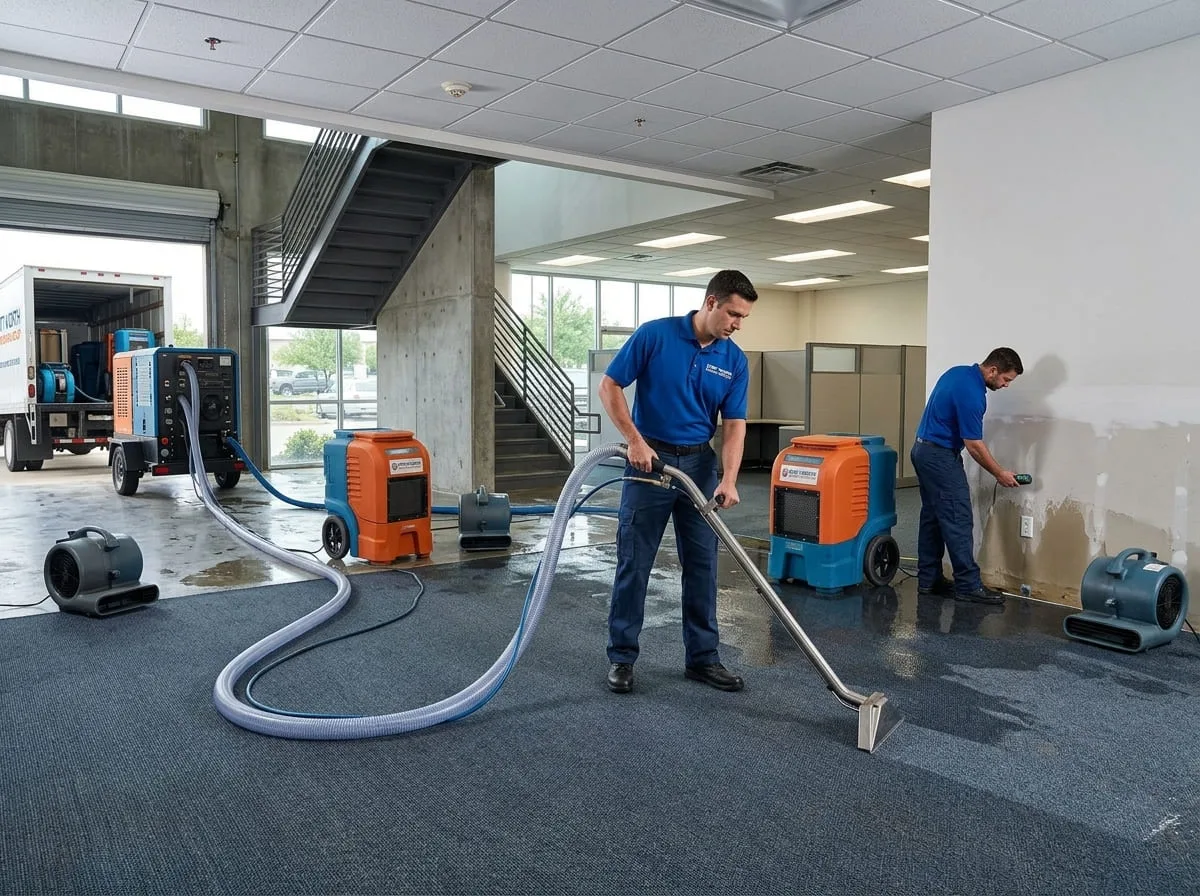
The process mirrors standard water damage restoration: extracting standing and trapped water, mapping moisture behind walls and under flooring with moisture meters, positioning air movers and dehumidifiers to dry affected materials, and monitoring drying progress until materials reach an acceptable moisture level. The difference is coordination — this drying work typically happens alongside soot and smoke assessment, not before or after it, since both crews often need access to the same spaces. The water extraction and water removal page covers the extraction step in more detail for any water loss, fire-related or not.
- Extraction of standing and trapped suppression water
- Moisture mapping behind drywall, under flooring and inside ceiling cavities
- Removal of saturated materials that can't be effectively dried
- Air movers and dehumidification equipment to dry the structure
- Ongoing moisture monitoring until drying is complete
What This Means for Mold Risk
Water sitting inside wall cavities or under flooring for more than a day or two, especially in Fort Worth's hot, humid stretches, creates real conditions for mold growth. Because firefighting water damage often affects areas that weren't visibly burned, it's easy to overlook next to the obvious fire damage — which is exactly why it needs its own dedicated assessment rather than being treated as an afterthought to the fire cleanup.
Residential and Commercial Considerations
A house fire might involve suppression water from a handful of hose lines concentrated in one area. A commercial fire, particularly one where a sprinkler system activated, can involve water damage across an entire floor or building even when the fire itself was contained to a smaller area. Commercial properties with sprinkler activation should assume water damage assessment is needed building-wide, not just near the fire's origin.
Frequently Asked Questions
Does firefighting water need to be treated differently than a burst pipe?
In some ways, yes. Suppression water can carry soot, ash and debris picked up on its way through the structure, which affects how it's classified and cleaned up compared to a clean water source. The extraction and drying principles are the same, but the assessment accounts for what the water passed through.
How do I know if there's hidden water damage from firefighting?
Signs include a musty smell, discoloration on ceilings or walls away from the visible fire damage, soft or spongy flooring, and peeling paint or bubbling drywall. A moisture meter reading is the reliable way to confirm what's not visible.
Can mold really start within a day or two after a fire?
Under the right conditions — warm temperatures, high humidity and water trapped inside a wall or ceiling cavity — mold growth can begin within 24 to 48 hours. That timeline is part of why firefighting water gets its own extraction and drying response rather than waiting until smoke cleanup is finished.
Will insurance cover both fire and water damage from the same incident?
Most policies that cover fire damage also cover the water damage caused by fighting the fire, since it's a direct result of the same covered event. Documentation of both the fire and the water damage helps support the claim — restoration professionals can document each separately for the adjuster.
Don't Let Suppression Water Become a Second Loss
Water used to fight a fire needs the same extraction and drying attention as any water damage emergency.
Get Emergency Water Removal