Soot Removal in Fort Worth, TX
Soot is acidic and keeps damaging surfaces the longer it's left — safe removal protects what's still salvageable.
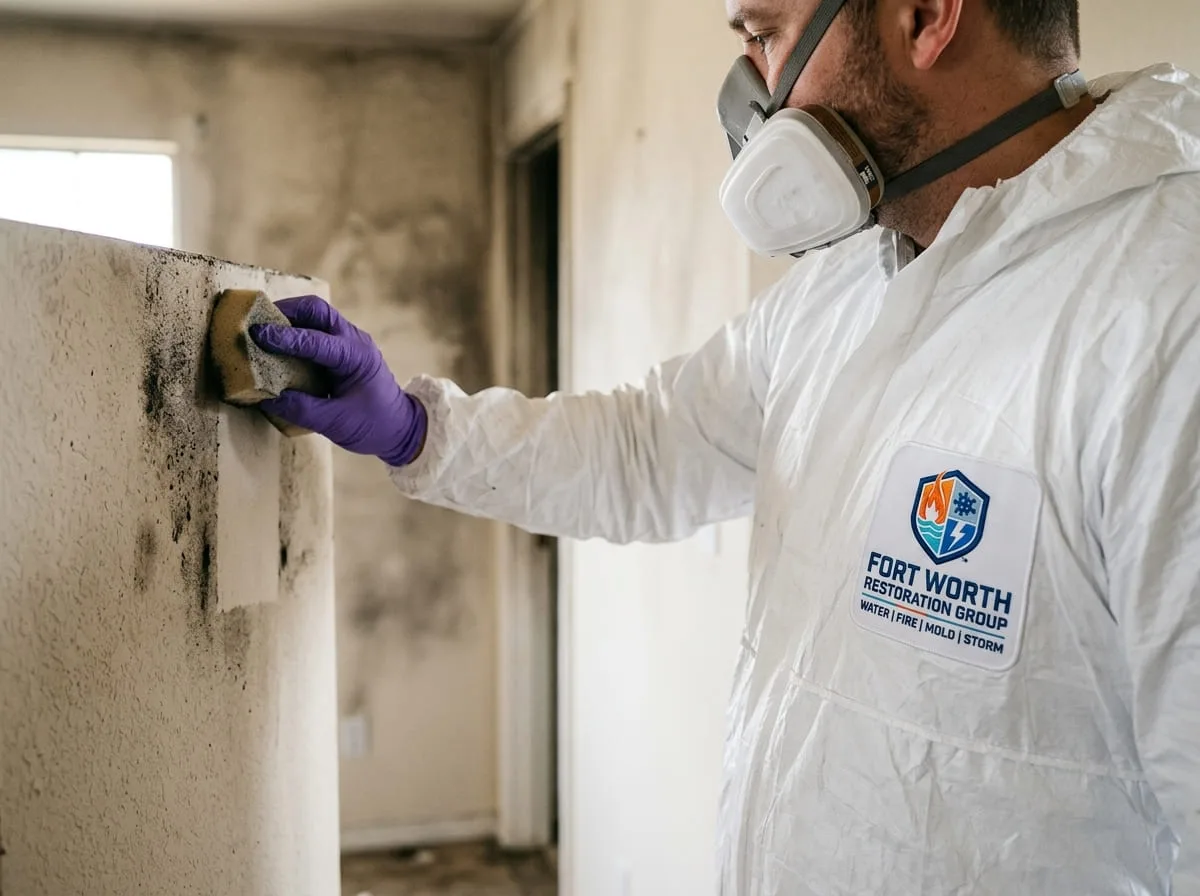
Soot is made up of fine carbon particles left behind by incomplete combustion, and it's mildly acidic. Left on metal, grout, glass or painted surfaces, it keeps etching and discoloring them well after the fire is out — which is why the timeline for soot removal matters more than it might seem.
Different fires produce different soot. A fire that burned hot and fast, often involving paper or wood, tends to leave a dry, powdery soot. A slower, smoldering fire, or one involving synthetic materials like plastics or foam furniture, leaves a wet, sticky soot that smears easily and clings more stubbornly to surfaces. Which type is present determines the removal method, since the wrong technique can smear soot deeper into a surface instead of lifting it clear.
Where Soot Ends Up
Soot doesn't stay confined to the room where the fire happened. Rising heat carries fine particles up and through the structure, settling on ceilings, upper walls, light fixtures and inside HVAC ductwork throughout the property. It also works into fabric fibers, carpet and gaps around baseboards and window trim, which is part of why a soot assessment covers more ground than the visibly burned area.
Dry vs. Wet Soot Removal Methods
Soot removal is handled by insured restoration crews trained in fire-residue chemistry, because dry and wet soot need different treatment. Dry soot is often removed with specialized sponges, HEPA vacuums and dry-cleaning techniques that lift particles without spreading them further. Wet, sticky soot generally needs a different approach — solvent-based or detergent cleaning matched to the surface — because dry methods just smear it. Using the wrong method on the wrong soot type is one of the most common ways a DIY cleanup attempt makes staining worse instead of better.
What Can Be Cleaned vs. What Needs Replacing
Hard, non-porous surfaces — metal, glass, tile, sealed wood — generally clean up well when soot is addressed early. Porous materials that absorbed heavy soot, particularly fabric, unsealed wood and some ceiling textures, sometimes need to be removed rather than cleaned, because soot residue can penetrate below the surface where cleaning can't fully reach it. That determination is made surface by surface during the assessment, not assumed up front.
Residential and Commercial Considerations
In a home, soot removal often overlaps with contents cleaning, since furniture, electronics and personal items in the affected rooms usually carry residue even if they weren't directly burned. In a commercial property, soot removal has to account for equipment, inventory and larger HVAC systems, and a business often needs at least partial soot clearance before it can reopen even part of the space.
Frequently Asked Questions
Can soot stains be fully removed from walls?
Many can, especially when addressed quickly and with the right method for the soot type. The longer soot sits, particularly on porous or unsealed surfaces, the more likely it is to leave permanent discoloration that requires repainting rather than cleaning.
Is soot dangerous to touch?
Soot can contain fine particulates and, depending on what burned, trace chemical residue from synthetic materials. Avoid prolonged bare-skin contact and don't disturb heavy soot deposits without protection — restoration professionals use appropriate protective equipment for this reason.
Why shouldn't I just wipe soot off myself?
Wiping soot with a dry cloth or the wrong cleaner often smears it deeper into the surface rather than lifting it off, and can turn a cleanable stain into a permanent one. Identifying the soot type before choosing a cleaning method is most of what makes professional removal effective.
Does soot removal include cleaning the HVAC system?
It should, where the HVAC system was exposed. Soot that settles in ductwork or on the air handler will keep recirculating through the property every time the system runs until it's cleaned or the affected components are addressed.
Related services
Nearby service areas
Soot Won't Wait Either
Acidic soot keeps damaging surfaces the longer it's left untreated — restoration professionals can respond around the clock.
Need Help Now? Call (682) 610-3848