Smoke Damage Cleanup in Fort Worth, TX
Smoke residue spreads far beyond the room where a fire started — cleanup that starts fast keeps it from becoming permanent staining.
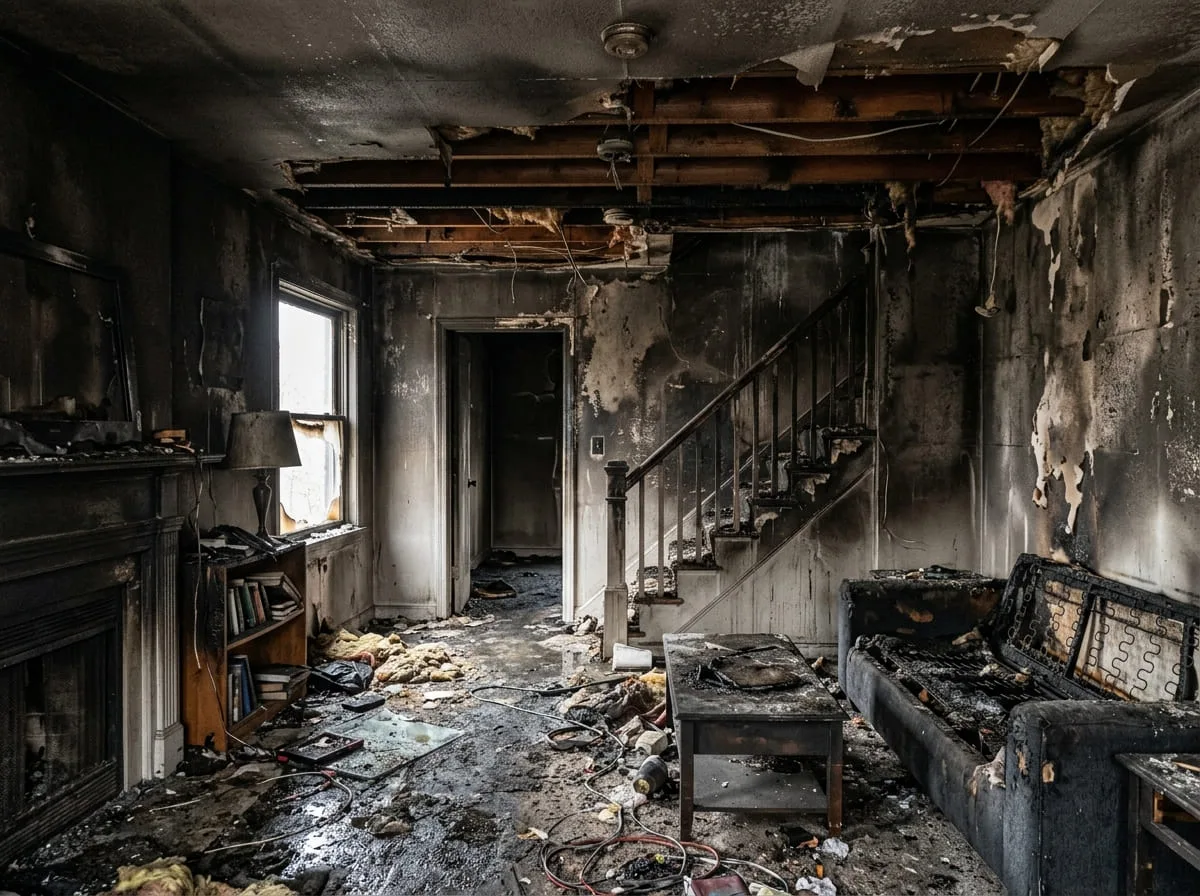
Smoke behaves differently than fire. It moves through HVAC returns, gaps around doors and even electrical outlets, settling on surfaces throughout a property well beyond the room where the fire occurred. A fire that stayed contained to a kitchen can still leave a smoke film on walls and ceilings two rooms away.
The type of smoke matters, too. A fast, hot fire tends to leave a dry, powdery residue that's easier to clean but can still stain porous surfaces. A slow, smoldering fire leaves a sticky, smearing residue that's harder to remove and often carries a stronger odor. Which type occurred determines the cleaning method, because the wrong approach can smear residue deeper into a surface instead of lifting it.
Signs of Smoke Damage Beyond the Room of Origin
- A visible haze or film on walls and ceilings in rooms away from the fire
- Yellowing or discoloration around light fixtures, vents and outlets
- A lingering smoke smell days after the fire is out
- Residue inside HVAC ductwork or on the air handler
- Fabric, curtains or upholstery that feel sticky or discolored
How Smoke Damage Cleanup Works
Cleanup typically starts with a walkthrough to identify how far the smoke traveled and which surfaces were affected, followed by an HVAC evaluation since ductwork is one of the most common paths for smoke to spread throughout a property. Smoke damage cleanup is carried out by IICRC-trained technicians using professional-grade equipment and cleaning agents matched to the residue type and the surface material — what's used on painted drywall is different from what's used on wood trim, metal fixtures or masonry.
Some surfaces respond well to cleaning; others, particularly porous materials that absorbed heavy smoke, may need to be removed and replaced rather than cleaned, since residue can penetrate deeper than it appears from the surface.
Residential and Commercial Smoke Cleanup
In a home, smoke cleanup usually covers walls, ceilings, trim, cabinetry and HVAC systems, along with an assessment of which belongings can be cleaned versus which need the contents pack-out process. In a commercial building, smoke can travel through a much larger ductwork system and affect multiple tenant spaces even when the fire was isolated to one unit, which makes an early HVAC assessment especially important in multi-tenant properties.
What to Avoid Before Crews Arrive
Resist the urge to wipe down smoke residue with a household cleaner or a dry cloth. Dry wiping can grind soot particles into a surface, and the wrong cleaning product can set a stain permanently rather than lifting it. Keep the HVAC system off until it's been inspected, since running it recirculates smoke particles into rooms that weren't previously affected.
Frequently Asked Questions
Can smoke-damaged walls be cleaned, or do they need to be repainted?
It depends on the surface and how much residue penetrated it. Many painted surfaces can be cleaned and repainted rather than replaced, but heavily saturated drywall or surfaces with wet-smoke residue sometimes need more than a wipe-down and a coat of paint to fully address the staining and odor underneath.
How do I know if smoke got into my HVAC system?
Dust or residue visible on vent covers, a smoky smell when the system runs, or a visible film on the air handler are all signs smoke reached the ductwork. Keep the system off and have it inspected before running it again — otherwise it will redistribute smoke particles through the property.
Does a small fire still need professional smoke cleanup?
Often, yes. Even a fire that looked minor can push smoke through gaps around doors, outlets and HVAC returns into rooms that show no visible fire damage. A professional walkthrough can confirm the actual extent before deciding what does and doesn't need cleaning.
How long does smoke damage cleanup take?
It depends on how far the smoke traveled and how many surfaces and systems were affected. A single-room loss with limited spread can be a matter of days; a property-wide loss with HVAC involvement takes longer. An accurate timeline follows the initial assessment, not before it.
Related services
Nearby service areas
Don't Let Smoke Residue Set In
Smoke damage cleanup gets harder the longer residue sits on surfaces and inside HVAC systems — restoration professionals are available 24/7.
Speak With a Restoration Team