Water Extraction / Water Removal
Getting standing water out fast is the first real step toward saving a property — not the whole job, but the one that has to happen first.
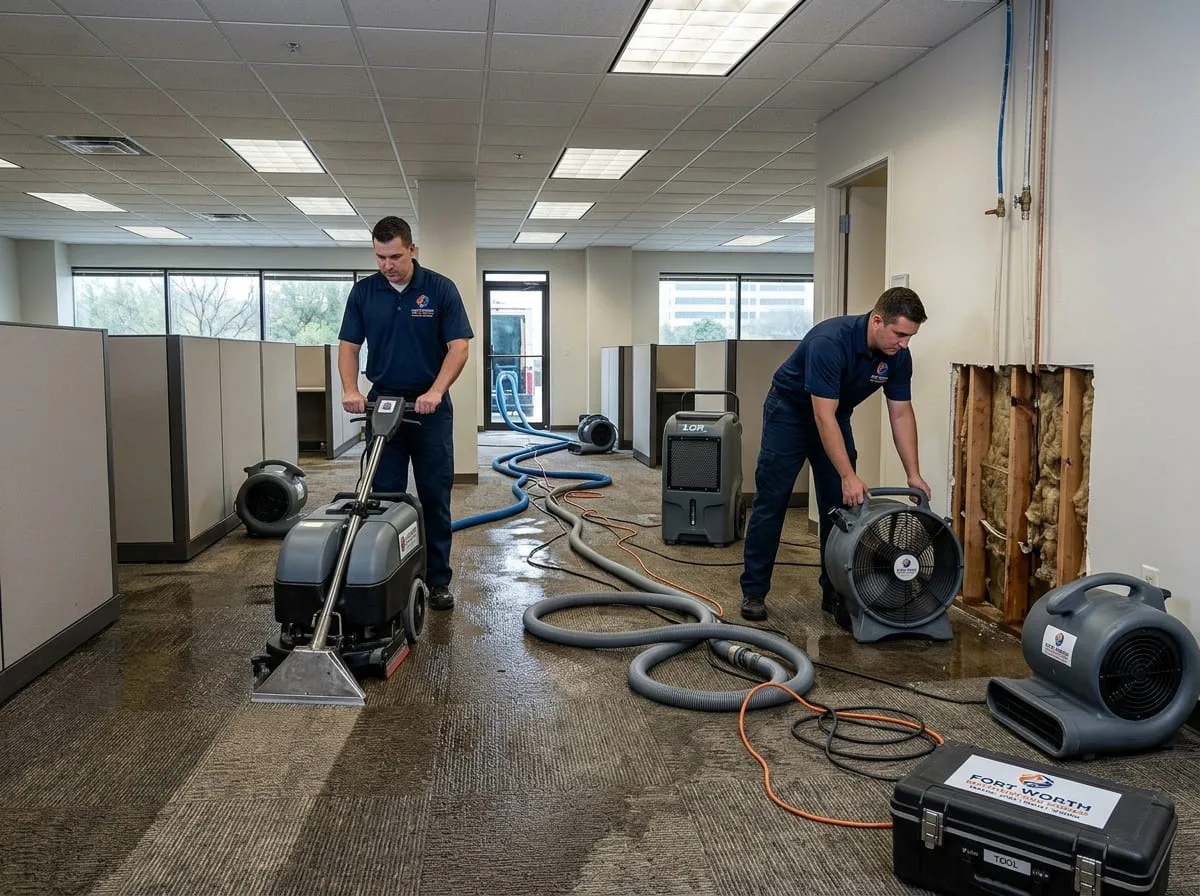
Water extraction and water damage restoration get used interchangeably, but they aren't the same thing. Extraction is the physical removal of standing and absorbed water — pulling it out of carpet, off hard flooring, and out of padding and subfloor before it spreads further or soaks deeper into building materials. Restoration is the broader process that follows, including drying, cleaning, and repairs.
Extraction has to happen quickly and it has to happen thoroughly. Water left sitting on flooring for even a few hours starts moving into places a mop or a shop vac can't reach, which is why professional extraction relies on equipment built to pull water out of materials, not just off the surface.
Common Sources of Water That Require Extraction
Extraction calls come from a wide range of situations, not just dramatic flooding:
- Burst or leaking supply lines and water heaters
- Overflowing washing machines, dishwashers, and toilets
- Roof and window leaks during storms
- Sewer or drain backups
- HVAC condensation line failures
- Slow leaks that went unnoticed until flooring or drywall showed damage
Signs Standing Water Is Still Present
Water isn't always visible on the surface. Carpet can look dry to the eye while padding underneath stays saturated for days. A few signs point to water that hasn't fully been removed: a spongy or squishy feeling underfoot, a cool or damp patch on flooring, a musty smell developing in a room, or baseboards and drywall that feel soft or swollen near the floor. Any of these is a reason to have the area checked with a moisture meter rather than assuming a wet spot dried on its own.
Extraction Equipment and How It's Used
Professional extraction relies on truck-mounted or portable extraction units that pull water out of carpet fiber and padding far more thoroughly than surface cleanup can manage, along with submersible pumps for standing water deeper than an inch or two. Moisture meters and infrared cameras are used to find water that has already moved into walls, subfloor, or other materials that aren't visibly wet, so extraction covers the actual extent of the loss rather than just what's obvious on the first walkthrough.
Restoration work is carried out by trained technicians using professional extraction and drying equipment, not just wet-vacs and box fans, which is part of why professional extraction reaches water that household equipment leaves behind.
Once visible and absorbed water is out, air movers and dehumidifiers take over to handle the moisture that extraction alone can't remove — that phase is structural drying, and it typically runs for several days rather than a single visit.
What Can Be Saved After Extraction — and What Can't
Extraction buys time and reduces how much has to be replaced, but it doesn't guarantee everything is salvageable. Carpet, in many cases, can be extracted, cleaned, and dried successfully if the response was fast and the water wasn't contaminated. Padding underneath is less forgiving and often needs replacing even when the carpet above it is saved. Solid hardwood can sometimes be dried in place if caught early; laminate and engineered flooring with water intrusion at the seams usually can't be. Drywall that's only wet at the surface can often be dried; drywall that's saturated or was in contact with contaminated water typically needs to be cut out and replaced.
Residential and Commercial Water Extraction
A flooded living room and a flooded office floor both need the water out fast, but scale changes the approach. Commercial spaces — open floor plans, server rooms, retail inventory — often need multiple extraction units running at once and a plan for keeping part of the business operating while work continues. Residential extraction is usually more contained but no less urgent, especially where finished flooring, cabinetry, or furniture is at risk.
Frequently Asked Questions
What's the difference between water extraction and water damage restoration?
Extraction is the physical removal of standing and absorbed water. Restoration is the full process, which includes extraction plus drying, cleaning, and any repairs needed afterward. Extraction is the first phase of restoration, not a separate service.
How is standing water removed from carpet and hard flooring?
Standing water is pulled out with submersible pumps, and carpet and padding are treated with extraction units designed to pull water out of the fibers and backing, not just off the surface. Hard flooring is extracted and then checked for water that may have reached the subfloor beneath it.
Can water be extracted from hardwood floors without ruining them?
Sometimes, if the response is fast and the wood hasn't started cupping or buckling. Extraction alone won't fully dry hardwood — specialized drying equipment and time are usually needed afterward, and even then some boards may require replacement depending on how long the water was present.
How soon after a leak should extraction begin?
As soon as possible. Water that sits for even a few hours starts moving into padding, subfloor, and wall cavities, which increases both the drying time and the amount of material that may need to be replaced.
Is extraction alone enough, or is drying also needed?
Extraction removes the bulk of standing and absorbed water, but materials typically retain moisture afterward. Structural drying with air movers and dehumidifiers is almost always needed to bring a space back to a safe, stable moisture level.
Standing Water Won't Remove Itself
The longer water sits, the more it spreads into padding, subfloor, and drywall that extraction alone can't fix.
Speak With a Restoration Team