Hardwood & Flooring Water Damage
Solid hardwood is one of the more expensive materials to replace and one of the most forgiving to dry, but only within a narrow window before the damage becomes permanent.
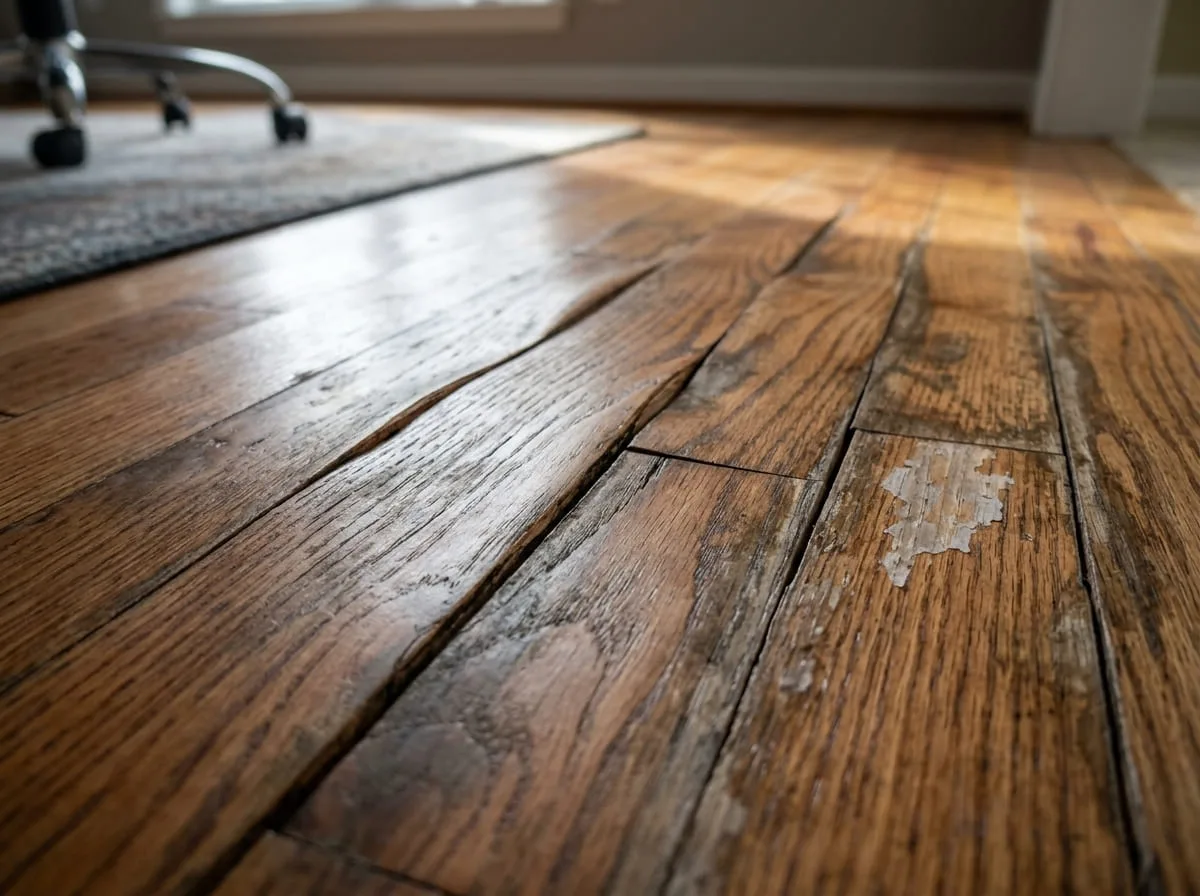
Wood flooring is one of the more expensive materials to replace after a water loss, and also one of the more forgiving if the response is fast enough. Solid hardwood can sometimes be dried and refinished rather than torn out, but only within a fairly narrow window before the damage becomes permanent.
Whatever the flooring type — solid hardwood, engineered wood, laminate, tile, or carpet — how it reacts to water and how much of it can realistically be saved comes down to the material, how long it sat wet, and what's happening underneath it in the subfloor.
How Water Damage Shows Up in Flooring
Cupping — where the edges of each board rise slightly higher than the center — is usually the first visible sign, and it can appear within a day or two of a spill or leak reaching under the flooring. Crowning is the opposite pattern, where the center of a board sits higher than the edges, and it often shows up after a floor has been dried too aggressively or unevenly.
Warping, buckling, and gaps between boards signal that water exposure has gone on long enough to affect the wood's structure, not just its surface moisture level. Laminate flooring typically swells and delaminates at the seams rather than cupping, and once its core material has absorbed water it generally can't be restored to its original shape.
What's Happening Under the Floor
Flooring is often the most visible casualty of a water loss, but the subfloor underneath is what actually determines whether the floor above it can be saved. Plywood or OSB subfloor that's absorbed water can delaminate, swell, or lose structural strength even if the flooring on top still looks intact.
On a slab foundation, moisture can also come from below, through the concrete itself if there's a vapor barrier issue or a plumbing leak inside the slab — a different problem than water spilled from above, and one that calls for a different diagnostic approach.
What Can Usually Be Saved
Solid hardwood that's been wet for a short period, from a relatively clean water source, has a reasonable chance of being dried in place and refinished, particularly if drying begins within the first day or two. Tile and most vinyl flooring can typically be cleaned and dried without needing replacement, since the material itself doesn't absorb water the way wood does — though grout lines and the subfloor beneath still need to be checked. Carpet exposed to clean water and addressed quickly can sometimes be lifted, dried, and reinstalled over new padding.
What Typically Has to Be Replaced
Some materials rarely survive a significant water event, regardless of how quickly drying begins:
- Laminate flooring that's swollen at the seams
- Engineered wood flooring with a thin veneer, which tends to delaminate when wet
- Carpet padding, which holds moisture and doesn't dry evenly even when the carpet on top can be saved
- Subfloor material that's swollen, soft, or delaminated, regardless of the original flooring type
The Drying and Restoration Process
Specialized drying mats or floor drying systems can sometimes be used on solid hardwood to draw moisture out from the surface and edges without removing the boards, monitored with moisture meters over several days to track progress. This is handled by technicians trained in moisture-sensitive drying methods, following recognized industry standards for structural drying rather than a one-size approach.
Where flooring can't be dried in place, it's removed so the subfloor beneath can dry fully before any new flooring goes down. Skipping this step is how a repaired floor ends up with a mold or moisture problem months later.
Frequently Asked Questions
Can cupped hardwood floors go back to normal?
Often, yes, if drying starts soon enough — as the wood releases the excess moisture it absorbed, cupping frequently improves or resolves on its own. Boards that have warped or buckled beyond cupping usually need to be replaced rather than dried flat again.
How long can hardwood sit wet before it's unsalvageable?
There's no fixed number, since it depends on the water source, the wood species, and the finish, but faster is always better — waiting more than a day or two significantly lowers the odds of saving solid hardwood.
Does the subfloor need to be checked even if the flooring on top looks fine?
Yes. Flooring can look intact while the subfloor underneath has already absorbed enough water to compromise it, particularly with tile or vinyl, where the surface material doesn't show water damage the way wood does.
Can laminate flooring be dried and reused?
Generally no, once it's absorbed water at the seams. Laminate's core material typically swells permanently, which is different from solid hardwood's response to moisture.
Is refinishing needed after hardwood floors are dried?
Usually, yes. Even hardwood that dries successfully often needs sanding and refinishing afterward to address surface staining, raised grain, or a finish that no longer looks uniform.
Flooring Has a Narrow Window to Be Saved
The sooner wet flooring is addressed, the more of it typically comes through intact.
Need Help Now? Call (682) 610-3848