
Emergency Water Damage Restoration
Standing water, a burst pipe, or a flooded room doesn't wait for business hours, and neither does emergency dispatch across Fort Worth and Tarrant County.
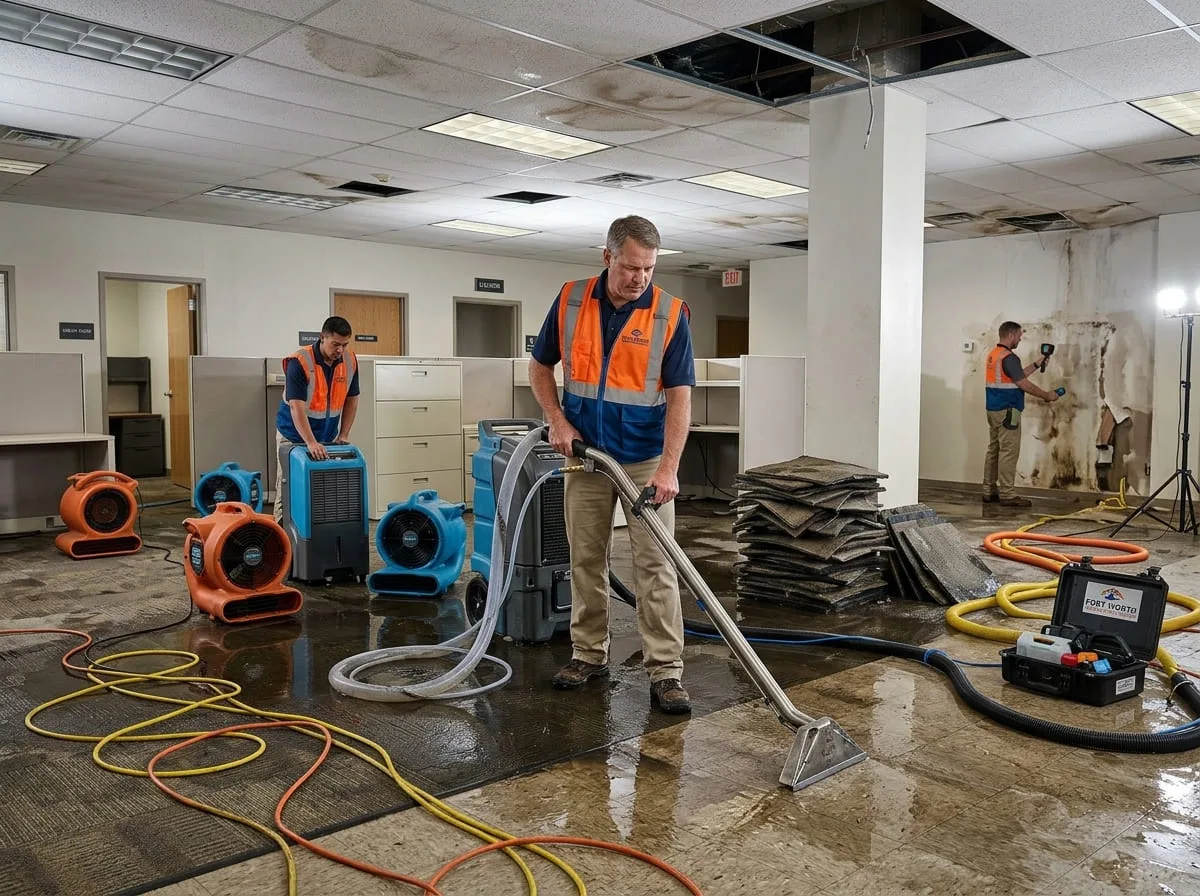
Water damage rarely announces itself at a convenient time. A supply line lets go overnight, a storm drives rain through a damaged roof during a Tuesday afternoon meeting, or a washing machine hose fails while the house is empty for the weekend. In every case, how much damage follows depends heavily on how quickly water is stopped, removed, and dried.
Emergency water damage restoration exists for exactly this kind of call — active water intrusion that needs a response now, not an appointment next week. Calls are answered around the clock and routed to restoration crews equipped for standing water, saturated materials, and the drying work that follows, in both homes and commercial buildings across the Fort Worth area.
When Every Minute of Standing Water Counts
Drywall begins absorbing water within minutes of contact. Untreated hardwood can start cupping the same day. And the humidity that builds up inside a closed room after a leak can create conditions where mold takes hold within 24 to 48 hours in many cases. None of this means a homeowner has failed if a few hours pass before help arrives — but it does mean the gap between discovering water and getting extraction underway is the single biggest factor in how much of a property can realistically be saved.
That's the reasoning behind treating water damage as an emergency service rather than a scheduled one. Every call is routed to experienced restoration crews serving Fort Worth and the surrounding Tarrant County suburbs, with dispatch available at any hour, any day of the week.
Signs You're Dealing With a Water Damage Emergency
Not every drip requires a call in the middle of the night, but several situations call for immediate action rather than waiting until morning:
- Visible standing water on flooring, especially near electrical outlets or panels
- Water actively coming from a ceiling, wall, or fixture
- A sudden, unexplained spike on the water meter or a drop in water pressure
- Sagging or bulging drywall or ceiling material
- A musty or damp odor developing within hours of a known leak
- Water affecting more than one room or more than one floor
What Happens When You Call
An emergency call starts with a short set of questions about the source of the water, how long it's been present, and what parts of the property are affected. That information helps determine what equipment and crew size the job needs before anyone arrives.
On site, the priority is identifying and stopping the water source where that's within the scope of the response, followed by extraction of standing water, moisture inspection to map how far water has traveled behind walls and under flooring, and setup of air movers and dehumidifiers to begin structural drying. Cleaning, sanitizing, and any repair work happen only after the property is confirmed dry.
Before the Restoration Team Arrives
A few steps taken in the first several minutes can limit how much damage spreads, without putting anyone at risk:
- Shut off the water source at the fixture or the main valve if it can be reached safely
- Move furniture, rugs, and electronics out of standing water if it's safe to do so
- Avoid stepping into standing water near outlets, switches, or appliances
- Photograph the affected areas and any visible damage for insurance purposes
- Keep children and pets away from the affected area
Residential and Commercial Emergency Response
A flooded kitchen and a flooded warehouse floor both call for fast extraction, but they don't call for the same response. Residential emergencies are usually about protecting a family's living space and belongings on a compressed timeline. Commercial losses often involve larger square footage, inventory or equipment at risk, and pressure to reopen the doors. Crews dispatched to either scenario bring equipment and staffing to match — the priority in both cases is stopping active water and beginning extraction as quickly as possible.
Frequently Asked Questions
How fast can someone respond to an emergency water damage call?
Calls are answered 24/7 and dispatched as quickly as crews and conditions allow. Exact arrival time depends on location, weather, and current call volume, so it's best to call right away rather than wait and see.
Should I turn off the electricity if there's standing water?
Only shut off power at the main panel if it can be reached without stepping through water. If a breaker panel or outlets are near the water, or there's any doubt about safety, wait for a professional or an electrician rather than risk contact with live current.
Is emergency service really available at night and on weekends?
Yes. Water damage doesn't wait for business hours, so calls are taken and dispatched 24 hours a day, seven days a week, including holidays.
What counts as an emergency versus something that can wait until morning?
Active water intrusion, standing water, or damage spreading to multiple rooms should be treated as an emergency. A small, contained drip that's already stopped can sometimes wait for a same-day appointment, but it's always worth calling to ask.
Will an emergency response team work with my insurance company?
Insurance claim assistance is available through the restoration professionals handling the job, including documentation of the damage that supports a claim.
Active Water Damage Right Now?
Every minute of delay adds to what has to be dried, cleaned, or replaced — get an emergency crew headed your way.
Need Help Now? Call (682) 610-3848