Mold Prevention & Moisture Control After Water Damage
Extracting standing water is only half the job — mold takes hold in the moisture left behind if drying stops before the structure is actually dry.
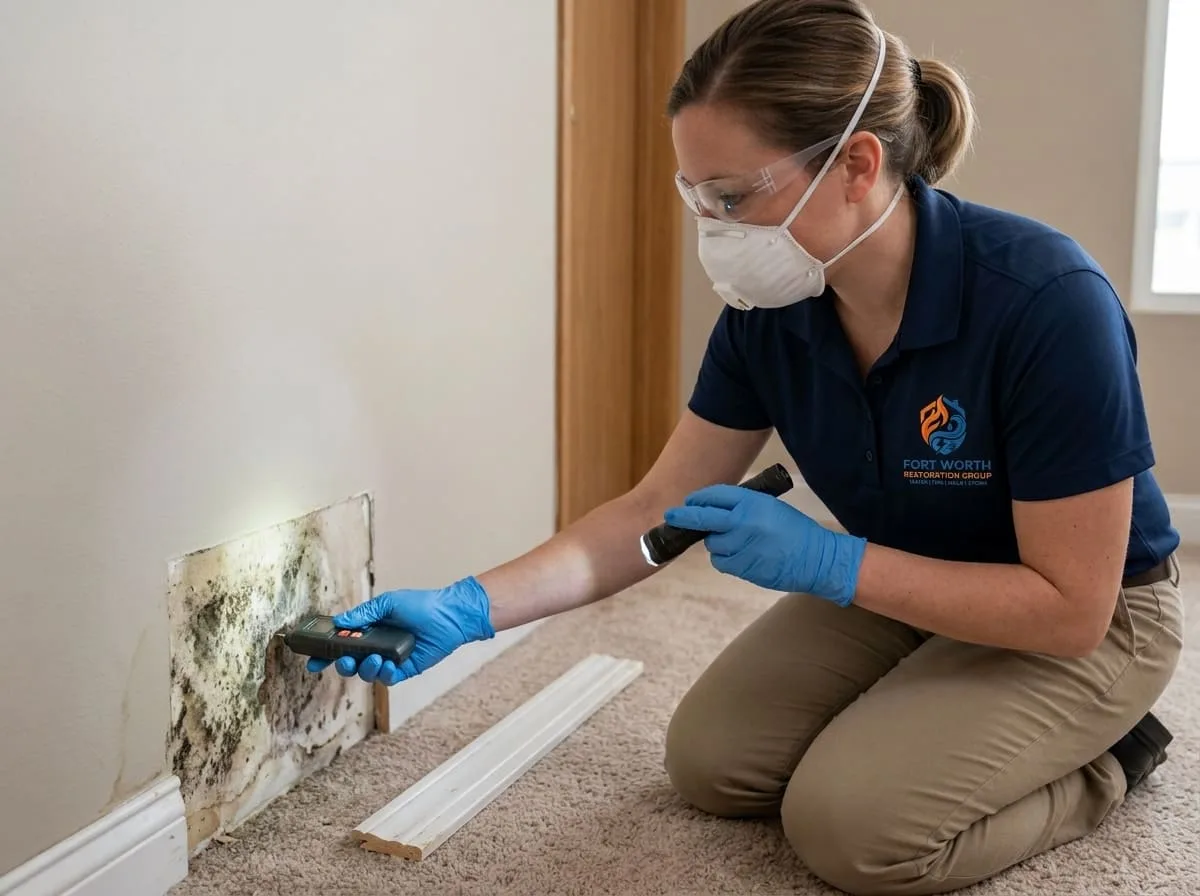
Drying a home after a water loss and preventing mold afterward aren't two separate jobs — they're the same job, done thoroughly. Mold doesn't need a flood to take hold; it needs damp material and enough time, and both of those are exactly what a water loss leaves behind if drying stops too early or misses moisture that isn't visible from the room.
In North Texas' long, humid stretches, that timeline is short. Materials that stay damp for more than a couple of days in warm, humid conditions are already in the range where mold can begin to establish itself, which is why moisture control isn't an optional add-on to water damage restoration — it's the part of the job that decides whether the loss stays contained or turns into a second, separate problem.
Why Water Damage and Mold Are the Same Problem
Mold spores are present in essentially every home and business. What changes after a water event is the moisture level of the materials those spores land on. Wet drywall, damp insulation, saturated carpet padding, and wood framing that hasn't fully dried are all environments where mold can establish itself within days rather than weeks.
That's why "the water is gone" and "the moisture problem is solved" aren't the same statement. Surface water can be extracted in an afternoon while structural materials underneath stay damp for much longer.
How Moisture Control Works During Restoration
Moisture mapping with meters and, where useful, thermal imaging identifies which materials are still damp beyond what's visible, since drywall, subfloor, and framing can hold moisture well after a surface looks dry. Air movers and dehumidifiers are used together, not separately — air movement alone doesn't remove moisture from the air, and dehumidification alone doesn't move enough air across wet surfaces to dry them efficiently.
Drying progress is checked over multiple days with the same moisture meters used at the start, rather than assumed complete once a set number of days has passed or a room looks and feels dry.
Conditions That Let Mold Take Hold After a Water Loss
A few patterns show up repeatedly in losses that turn into mold problems:
- Drying equipment removed before moisture readings confirm materials are actually dry
- Wet materials — carpet padding, insulation, drywall — left in place instead of removed when they can't be dried
- Poor airflow in closets, behind furniture, or inside cabinetry that trapped humidity after the main area looked dry
- A slow, low-visibility leak that went undiscovered for an extended period before the main water event was addressed
- High indoor humidity maintained after drying equipment is removed, especially during Fort Worth's hot, humid summer months
What to Do If Mold Has Already Started
A small amount of surface mold discovered soon after a water event is a different situation than mold that's been established for weeks, and the appropriate response differs accordingly. Extensive growth, a strong musty odor, or mold behind walls or under flooring typically calls for dedicated mold remediation rather than moisture control alone. That process — inspection, testing, containment, and clearance — is covered in more depth on the Mold After Water Damage page, since it's one of the most common ways a water loss becomes a mold call, and on the wider Mold Remediation hub for a fuller look at how that side of the work is handled.
Reducing Mold Risk After the Restoration Work Is Done
A few habits in the weeks after a loss lower the odds of a recurrence:
- Keep indoor humidity below roughly 50-60% where practical, particularly in the weeks after a water event
- Check previously affected areas periodically for odor, discoloration, or dampness returning
- Confirm that any HVAC condensate line, exterior grading, or plumbing issue that contributed to the original loss was actually corrected, not just dried around
- Keep furniture and stored items slightly off walls and floors in previously affected rooms to maintain airflow
Frequently Asked Questions
How long after water damage can mold start growing?
In warm, humid conditions, mold can begin developing on damp material in as little as 24 to 48 hours. That timeline is a major reason drying is treated as time-sensitive rather than something that can wait a few days.
Does drying equipment alone prevent mold?
It's the most important part of prevention, but not the only part. Equipment has to run long enough, and moisture readings need to confirm materials are actually dry before it's removed. Pulling equipment early because a space "looks dry" is a common way mold problems develop after a loss.
If mold is already visible, is moisture control still enough?
Not usually. Visible mold growth, especially anything beyond a small, easily accessible area, generally needs dedicated mold remediation — testing, containment, and removal — rather than drying alone. The Mold After Water Damage page covers what that process typically looks like.
Can mold grow behind walls even if the wall surface looks dry?
Yes. A wall surface can dry faster than the insulation or framing behind it, which is why moisture meters are used to check materials, not just how a surface looks or feels.
Is mold prevention included in standard water damage restoration?
Thorough drying that reaches actual moisture targets, not just a visual check, is the core of mold prevention and a standard part of professional water damage restoration — it isn't a separate add-on service.
Related services
Nearby service areas
Stopping Water Damage from Becoming a Mold Problem
Thorough drying now is what keeps a water loss from turning into a second, separate mold call later.
Call Now for Water Damage Help