
Ceiling & Wall Water Damage
A stained ceiling or bubbling wall is usually the last sign of a problem, not the first — the water has often been sitting behind the surface for longer than it looks.
A brown ring spreading across a ceiling, or paint that's started to bubble on a wall, is rarely just a cosmetic problem. It's usually the visible edge of water that's been sitting inside a ceiling cavity or wall assembly longer than it appears from the room.
Because ceilings and walls hide most of what's actually happening, the signs listed below tend to show up late, not early. By the time a stain or a sag is visible, water has often already reached insulation, framing, or an electrical fixture behind the surface.
Signs of Water Damage in Ceilings and Walls
Some signs are obvious and some are easy to dismiss as unrelated. Worth checking for:
- A yellow-brown ring or discolored patch that's grown over time
- Paint or wallpaper that's bubbling, peeling, or feels soft to the touch
- A ceiling that sags, feels spongy, or shows a slight bow when viewed at an angle
- Cracking plaster or drywall tape lines separating
- A musty odor with no obvious source
- A light fixture, fan, or vent that shows staining or drips water when running
What Usually Causes It
Roof leaks following hail or wind damage — a real and recurring risk given Fort Worth's hail history — often show up first as a ceiling stain in an upstairs room or attic-adjacent space, well after the storm that caused it. A supply line or drain leak from a bathroom or kitchen on an upper floor is a common source of ceiling damage on the floor below in two-story homes.
Condensation from a poorly insulated attic, or an HVAC line running through a wall cavity, can cause slow, chronic staining that looks similar to a leak but calls for a different fix. In slab-built homes, moisture wicking up an exterior wall from grading or drainage issues can also show up as damage near a baseboard rather than the ceiling.
Finding Moisture That Isn't Visible Yet
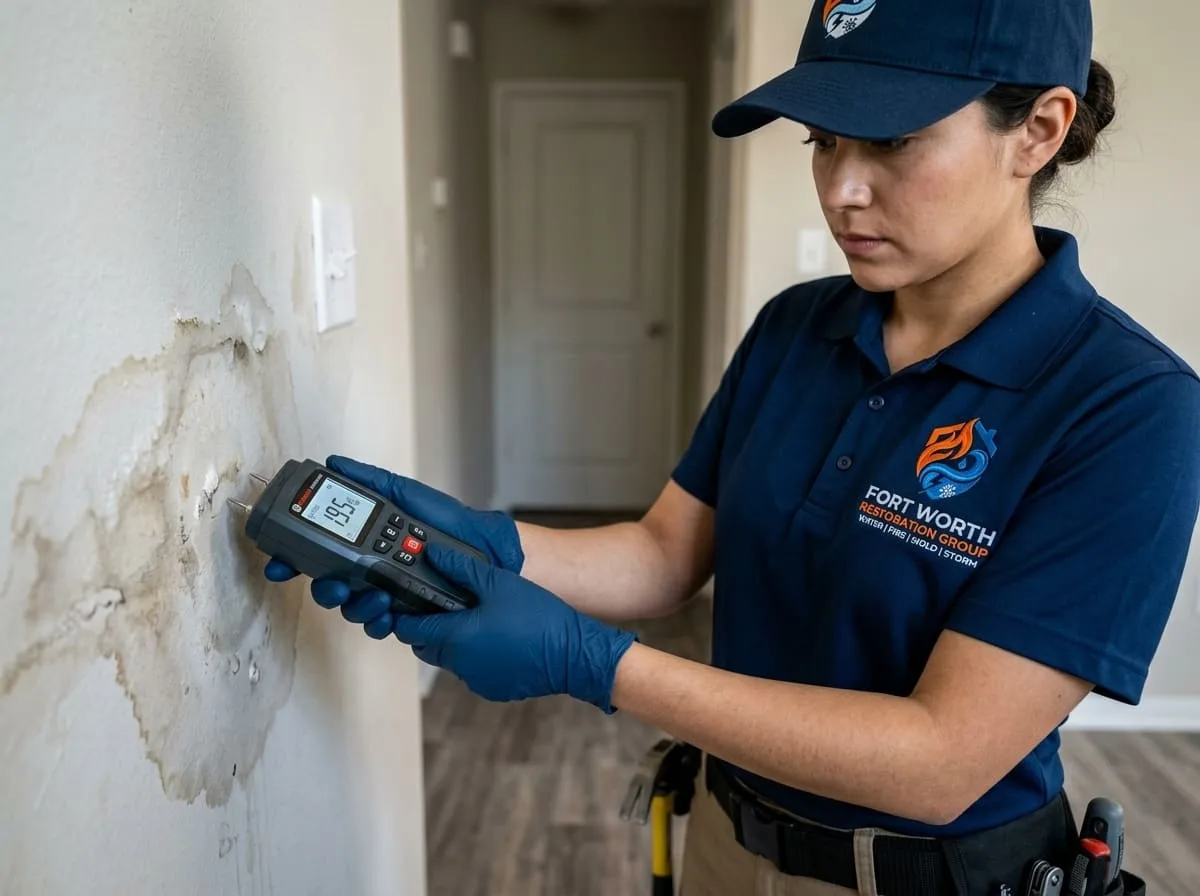
A moisture meter, and where useful a thermal camera, lets a technician trace how far water has traveled inside a wall or ceiling cavity beyond the stain itself — often several feet past what's visible from the room. This diagnosis is carried out by trained technicians using the same equipment on every call, not a visual guess based on the size of the stain.
It matters because drying only the visible stain and leaving the surrounding cavity wet is exactly how a water event turns into a mold problem weeks later.
Electrical Safety Around Ceiling and Wall Damage
A wet ceiling with a light fixture, fan, or recessed can light is an electrical hazard, not just a water problem. A ceiling fixture that's dripping or a switch that's damp should be treated as live until a professional confirms otherwise.
Cut power to the affected circuit at the breaker if that can be done safely without entering standing water, and avoid operating any switch or fixture showing signs of water intrusion. If there's any doubt, leave it alone and have it checked before restoration work begins in that area.
What Can Be Dried vs. What Has to Come Out
Drywall that's been wet briefly from a clean-water source can sometimes be dried in place if it hasn't lost structural integrity. Drywall that's swollen, crumbling, or exposed to contaminated water typically needs to be cut out and replaced.
Insulation inside a wet wall or ceiling cavity almost always needs to be removed rather than dried — it loses effectiveness and holds moisture against framing. Framing and joists exposed briefly can usually be dried and reused; wood that's stayed wet long enough to show soft spots or warping needs further evaluation before rebuild.
Frequently Asked Questions
Is a ceiling stain always a sign of an active leak?
Not necessarily — a stain can be from a leak that's already been fixed but never dried out. Either way, the area shouldn't be assumed dry without a moisture check, since trapped moisture behind a ceiling can support mold growth even after the original leak stops.
Is it safe to turn on a light near a water-stained ceiling?
Treat any fixture showing water staining or dripping as a hazard and avoid using it until power is cut to that circuit and the area has been inspected. Water intrusion around wiring is a legitimate fire and shock risk.
How do you know how far water traveled inside a wall?
Moisture meters, and in many cases thermal imaging, are used to map how far water spread behind the surface, since it often extends well beyond the visible stain or bubbled paint.
Can a ceiling be repaired without replacing the whole thing?
Often, yes. A contained section can sometimes be cut out and patched rather than replacing an entire ceiling, depending on how far the water traveled and how the surrounding material held up.
How long does it take for a stain to show up after a roof leak?
It varies. Some leaks show a stain within hours; others, especially slow ones behind insulation, can take days or weeks to become visible on the ceiling surface — part of why a suspected roof leak is worth investigating even before a stain appears.
Don't Wait for the Stain to Spread
A ceiling or wall stain usually means more water is hiding behind it than what's visible.
Call Now for Water Damage Help