
Residential Water Damage Restoration
From a burst supply line under a slab to a water heater failure in the garage, a wet home needs extraction and drying that works around a family still living in it.
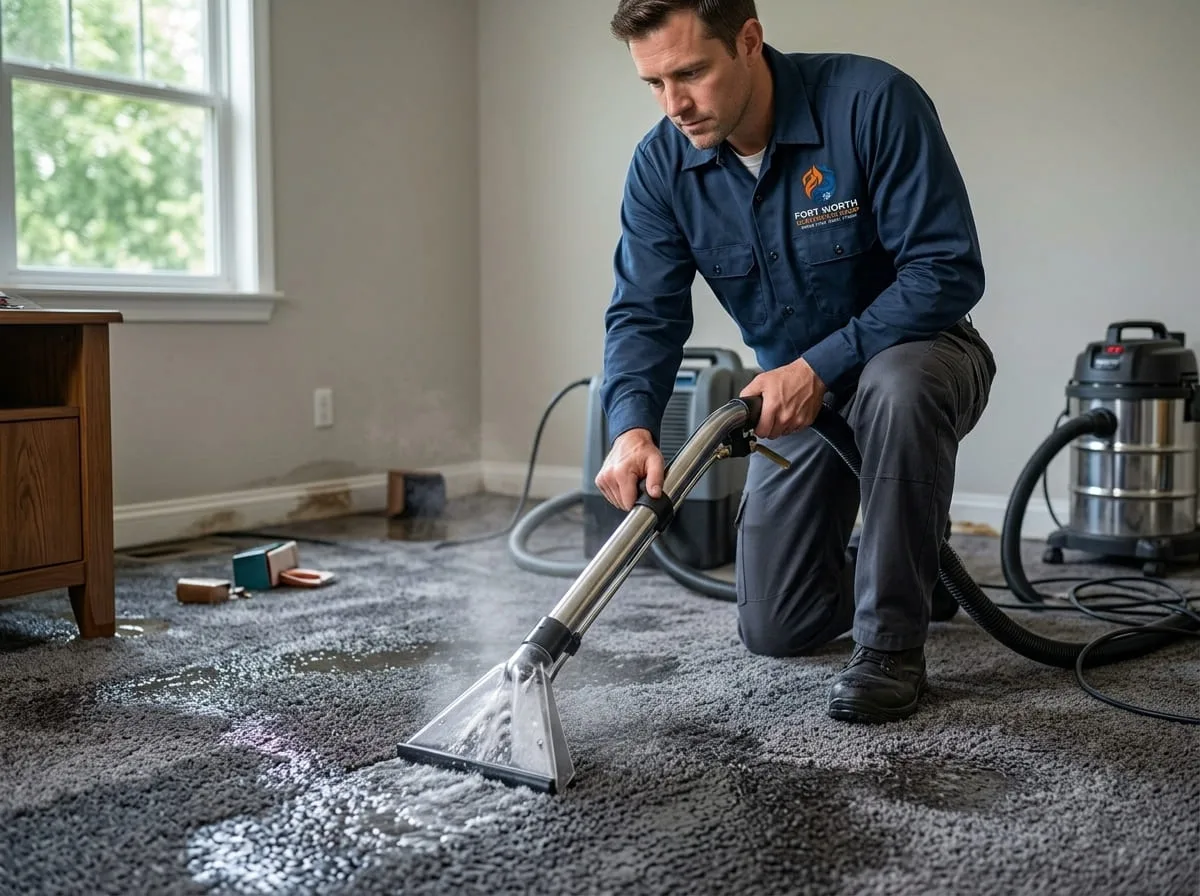
Water damage inside an occupied home is different from a loss in a vacant property or a commercial space. There are bedrooms that still need to be slept in, a kitchen still in daily use, and a household trying to keep life moving while part of the house is wet.
Whether the source is a failed supply line under a slab, a water heater that finally let go, or wind-driven rain that found its way through a roof during a spring storm, the same principle applies: the faster standing water and trapped moisture are addressed, the more of the home's structure, flooring, and belongings can realistically be saved.
The First 24 to 48 Hours Matter Most
Water spreads within minutes of a leak or overflow, wicking into drywall, baseboards, cabinetry, and subflooring long before it's visible from a hallway. In a Fort Worth home built on a slab, water from a burst supply line often travels along the vapor barrier and surfaces through the edges of the flooring several feet from where the pipe actually failed, which is part of why stopping the leak and drying the structure are two different jobs.
Left untreated, damp drywall and wet carpet padding create the exact humidity and temperature range mold needs to establish itself, and in North Texas' humid summer stretches, that timeline is measured in days, not weeks.
Signs a Home Needs Professional Water Damage Restoration
Not every water problem announces itself with a flood. Some of the more common signs a home needs professional attention include:
- Standing water on flooring, or carpet that squishes underfoot
- Baseboards or drywall that feel soft, swollen, or unusually cool
- A musty smell in a room that wasn't there before
- Discoloration or a spreading stain on a ceiling or wall
- Cupping, buckling, or gaps appearing in hardwood or laminate flooring
- Condensation or unexplained dampness around windows, exterior walls, or slab edges
Common Causes in Fort Worth Homes
A meaningful share of homes across the inner-ring Tarrant County suburbs were built during the postwar and mid-century boom, meaning original or aging galvanized supply lines are still in service in some of them — a documented failure point that tends to show up as a pinhole leak inside a wall rather than a dramatic burst.
Newer construction is typically on copper or PEX, which fails less often on its own but is still vulnerable to connector lines, water heater tanks, and appliance supply hoses. Hard freezes are infrequent in North Texas but not rare, and exposed or poorly insulated lines that freeze and split are a recurring seasonal cause of residential water loss. Roof damage from hail — a well-established risk in this part of Texas — can also let rain into an attic and ceiling cavity well after the storm that caused it has passed.
What the Restoration Process Involves
A residential loss typically starts with an assessment of how far water has traveled and which materials are affected, followed by extraction of standing water with pumps and extraction equipment. Moisture mapping with meters and, where useful, thermal imaging identifies water that has migrated behind walls or under flooring where it isn't visible, which shapes the drying plan that follows. Work performed by licensed and insured restoration professionals covers the full sequence, not just the visible cleanup.
Air movers and dehumidifiers are positioned to dry the structure in place wherever that's realistic, with progress monitored over several days rather than assumed complete on a fixed schedule. Where materials can't be dried in place — saturated drywall, ruined padding, delaminated subfloor — those sections are removed before drying and rebuild can proceed. Not every material makes it through a loss, and a straightforward answer about what has to be replaced is part of an honest assessment, not a sales tactic.
Before Help Arrives
A few precautions in the first minutes can limit how far the damage spreads:
- Shut off the water source at the fixture or the home's main shutoff, if it's safe to do so
- Avoid walking through standing water near outlets or electrical fixtures; cut power to the affected area at the breaker only if it can be reached without stepping into water
- Move furniture, rugs, and valuables off wet flooring where possible
- Photograph the damage before anything is moved or cleaned up, for insurance purposes
- Avoid using a household vacuum on standing water
Frequently Asked Questions
How quickly does water damage need to be addressed in a home?
Extraction should start as soon as it's safely possible. Most restoration professionals treat the first 24 to 48 hours as the window where the most material can still be dried and saved rather than replaced. Waiting longer increases both the damage and the odds of secondary mold growth.
Can wet carpet be saved?
Padding that has been saturated, especially by contaminated water, almost always has to be replaced — it holds moisture and doesn't dry evenly. The carpet itself can sometimes be lifted, cleaned, and reinstalled over new padding if it was clean water addressed quickly, but that's a case-by-case call once it's inspected.
Should the power be turned off after a water leak?
If it can be done safely from a dry area, yes. Never enter standing water to reach a breaker or outlet; if the panel isn't reachable without walking through water, leave it and have a licensed electrician or the restoration crew check it first.
Do restoration professionals work directly with homeowners insurance?
Insurance claim assistance is available through the restoration professionals handling the work, including the documentation and moisture readings insurers typically request.
Does it matter if no one was home when the leak started?
The extent of damage usually comes down to how long water sat before it was found, not whether anyone was home. A slow leak behind a wall can run for days before it's noticed, which is why unexplained humidity, odor, or a rising water bill are worth investigating promptly.
Water Doesn't Wait, and Neither Should the Response
Every hour water sits in a home adds to what has to be dried, cleaned, or replaced.
Get Emergency Water Removal