
Appliance Leak / Overflow Cleanup
A water heater, washing machine, dishwasher, refrigerator line, or HVAC condensate leak can soak a floor and subfloor long before anyone notices it's happening.
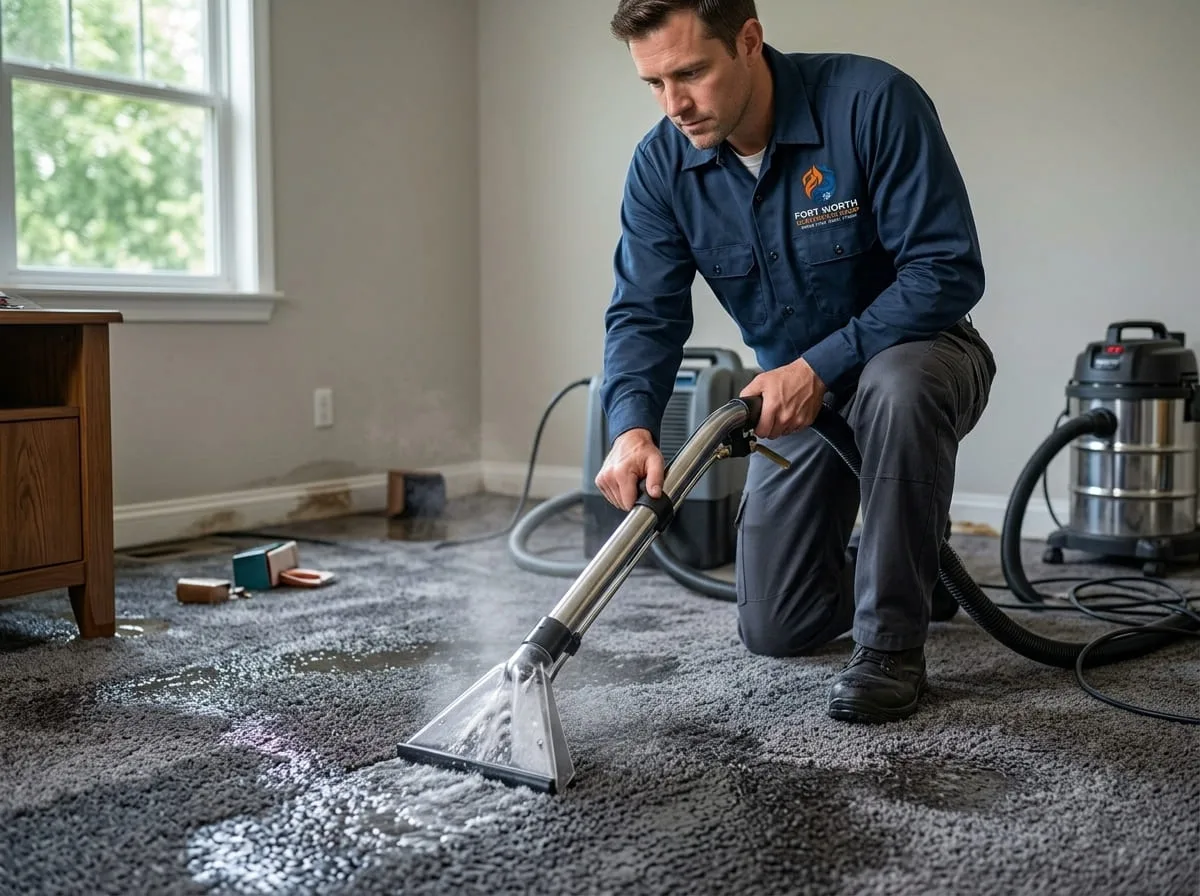
Not every water loss starts with a storm or a burst pipe. Some of the most damaging leaks in a home start quietly, from a machine that's supposed to hold water safely — a water heater tank that finally gives out, a washing machine hose that lets go mid-cycle, or a refrigerator line that's been dripping into a cabinet for weeks before anyone notices.
Appliance leaks are deceptive because the water is often contained to a small area at first, but a laundry room or kitchen floor can hold a surprising amount of water before it becomes obvious. By then it's usually traveled into a subfloor, an adjacent room, or the unit below in a multi-story or multi-unit building.
Common Sources of Appliance Water Damage
Water heaters: a failed tank or a corroded fitting can release the entire contents of the tank at once, often in a garage or closet where it goes unnoticed until it reaches the door. Washing machines: a worn or improperly connected supply hose is one of the more common sources of major indoor flooding, since a burst hose can run at full water pressure until someone shuts it off.
Dishwashers: door seal failures and clogged or cracked drain lines tend to leak slowly under the unit and into surrounding cabinetry before they're noticed. Refrigerators: ice maker supply lines are thin, low-pressure lines that are easy to overlook, and a slow drip behind or under a refrigerator can warp flooring for weeks before it's discovered. HVAC systems: a clogged condensate line or a full drain pan can leak steadily around an indoor air handler, especially in an attic-installed system where a leak can affect the ceiling below before it's ever seen from inside the house.
Why These Leaks Are Easy to Miss
Most appliance leaks happen somewhere out of daily sightline — behind a refrigerator, inside a cabinet, in an attic, or in a garage — which means the leak itself often isn't what gets noticed first. A soft spot in flooring, a musty smell, or a warped cabinet base is frequently the first sign, and by that point the leak has likely been running for some time.
Risks of Waiting to Address It
A slow leak that runs for days or weeks does more cumulative damage than a fast one caught quickly, because the water has time to fully saturate subflooring, cabinetry, and, in some cases, the ceiling of the room below. In North Texas' warm, humid stretches, a wet cabinet base or subfloor left unaddressed can develop mold within days rather than weeks.
What the Cleanup and Restoration Process Involves
The appliance and any affected cabinetry are typically moved or accessed to reach the wet area fully, since drying around an appliance rather than under it doesn't solve the problem. Moisture readings determine how far water traveled into flooring, subfloor, and adjacent walls — often further than the visible wet spot suggests.
Air movers and dehumidifiers dry the affected structure in place where possible. Every appliance-related call, whatever time it comes in, is routed to restoration professionals equipped for emergency response, since a leaking water heater at midnight is just as urgent as one at noon. Subfloor or cabinet material that's swollen or delaminated typically needs to be removed and replaced rather than dried.
Before Help Arrives
A few quick steps limit how far an appliance leak spreads:
- Shut off the water supply to the appliance, or the home's main shutoff if the appliance valve isn't accessible
- Unplug the appliance if it can be reached without stepping into water
- Move any items stored nearby off the wet floor
- Photograph the area and the appliance before cleanup begins, for insurance purposes
- Avoid running the appliance again until it's been inspected
Frequently Asked Questions
Is a slow appliance leak really worth calling a professional for?
Yes. A leak that seems minor on the surface has often been running long enough to reach subflooring or a wall cavity by the time it's noticed, and drying it properly usually requires more than surface cleanup.
Can flooring under a refrigerator or dishwasher be saved?
It depends on the material and how long it was wet. Vinyl and tile have a better chance than laminate or engineered wood, but any flooring that's been sitting in water for an extended period should be checked for subfloor damage underneath.
What should be done with a water heater that's leaking?
Shut off both the water supply to the tank and the gas or electric power to the unit if it can be done safely, then have it inspected. A failed water heater tank isn't typically repairable and usually needs replacement alongside the cleanup.
Does homeowners insurance cover appliance leaks?
Coverage varies by policy and cause — sudden and accidental discharge is commonly covered, while damage from a leak that went unaddressed for a long period may be treated differently. Documentation from the restoration professionals can support whatever the claim process requires.
How can appliance leaks be prevented?
Replacing rubber washing machine hoses with braided stainless steel ones, checking ice maker lines periodically, and having an aging water heater inspected are simple steps that reduce the risk of a sudden failure.
Small Leak, Real Damage
An appliance leak that seems contained on the surface is often bigger underneath.
Need Help Now? Call (682) 610-3848