
Crawl Space Water Damage
Fort Worth's older pier-and-beam neighborhoods near downtown and TCU have a genuine crawl space beneath the home, and that changes how water damage there needs to be handled.
Most homes across Fort Worth and the surrounding suburbs are built on a concrete slab, a direct response to the region's expansive clay soils. That's not true everywhere. Fort Worth's older historic-core neighborhoods near downtown and TCU — including Fairmount, Ryan Place, Berkeley Place, and Mistletoe Heights — were largely built in the early-to-mid 1900s on pier-and-beam foundations, which means these homes have a genuine crawl space underneath rather than a slab.
A crawl space brings its own water damage profile. Plumbing runs are more exposed to freeze risk, grading and drainage around the perimeter matter more, and moisture that gets underneath a home built this way can sit against floor joists and subfloor for a long time before anyone notices from inside the house.
Why Crawl Spaces Are a Different Kind of Water Problem
A crawl space is, by design, closer to grade and more exposed to ground moisture than a home built on a slab. Poor drainage, grading that slopes toward the foundation instead of away from it, or a gap in the vapor barrier can let moisture accumulate underneath a home steadily, without a single dramatic leak event to point to.
Because the space is rarely visited, water damage here is usually found later than it would be inside a living space — often by smell, a soft spot in the flooring above, or a routine inspection rather than an obvious event.
Common Causes of Crawl Space Water Damage
Supply and drain lines running through a crawl space are more exposed to temperature swings than lines inside conditioned walls, making them more vulnerable during North Texas' periodic hard freezes. Older galvanized plumbing, common in homes from this era, is a documented failure point and often runs at least partly through the crawl space in pier-and-beam construction.
Poor perimeter drainage or a missing or damaged vapor barrier lets groundwater and humidity migrate under the home, especially after heavy rain. A water heater or laundry connection located in or near a crawl space access area can also leak directly into the space rather than into a visible room.
Signs of Crawl Space Water Damage from Inside the Home
Since the space itself is out of sight, these indirect signs are usually what gets noticed first:
- A musty or earthy odor noticeable in lower rooms, especially in older homes with original hardwood floors
- Flooring that feels soft, bouncy, or slightly uneven in spots
- Higher-than-expected indoor humidity even with air conditioning running
- Visible sagging or an uneven feel to floors near the perimeter of the house
- Insects or pests more active than usual, often drawn to persistent moisture
What the Restoration Process Involves
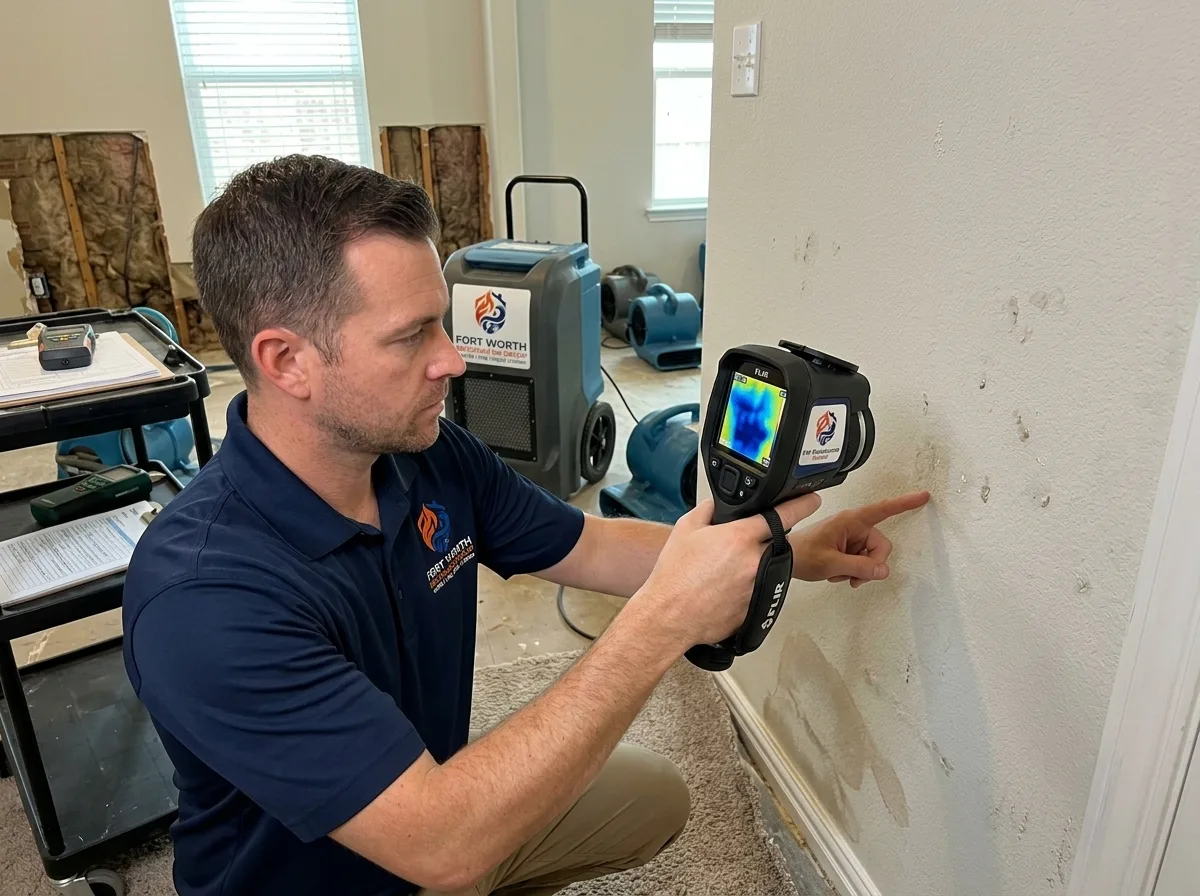
Assessment typically starts with accessing the crawl space directly to identify standing water, wet insulation, or a damaged vapor barrier, along with moisture readings on the joists and subfloor above. Standing water is extracted, and low-profile drying equipment and dehumidifiers sized for the space are positioned to dry it without the open airflow a normal room would have. Crawl space calls are routed to restoration crews with access to IICRC-certified training in structural drying, since a pier-and-beam foundation is a different drying environment than a slab.
Insulation that's been saturated typically needs to be removed and replaced rather than dried, since wet insulation in a crawl space tends to stay damp against the framing far longer than it would elsewhere. Because a wet, poorly ventilated crawl space is exactly the environment mold needs, restoring proper moisture levels and vapor barrier integrity is treated as part of the job, not an afterthought.
Crawl Space Moisture and Mold Risk
Because a crawl space stays damp longer and gets far less airflow than the rest of a home, it's one of the more common sites for mold to develop after a water event that would dry out quickly elsewhere in the house. Persistent crawl space moisture, whether from a one-time leak or an ongoing drainage issue, is covered in more depth on the Crawl Space & Slab Moisture Mold Remediation page for homeowners dealing with an established mold concern rather than a recent water event.
Frequently Asked Questions
How common are crawl spaces in Fort Worth homes?
They're a genuine minority. Most homes across Fort Worth and the surrounding suburbs are built on a concrete slab. Crawl spaces are concentrated in the city's older historic-core neighborhoods, generally homes built on pier-and-beam foundations in the early-to-mid 1900s.
How do you know if there's water damage in a crawl space you can't easily see?
A musty smell inside the home, unusually high indoor humidity, or flooring that feels soft or uneven are common indirect signs. A direct inspection of the crawl space itself, including moisture readings on the joists and subfloor, is the reliable way to confirm what's happening underneath.
Is it safe to go into a crawl space to check for water damage?
Crawl spaces can have limited clearance, exposed wiring, and, if there's standing water, contamination risk depending on the source. A firsthand look is useful, but a full assessment with proper equipment and moisture readings is best left to a restoration professional, especially where there's any standing water.
Does a wet crawl space need the vapor barrier replaced?
Often, yes, if the existing barrier is torn, missing, or has been sitting under standing water. A damaged vapor barrier is frequently part of why moisture got in, and leaving it in place after drying doesn't address the underlying issue.
Can crawl space moisture affect the floors above it?
Yes. Persistent moisture against floor joists and subfloor can eventually affect the flooring inside the home, including softness, unevenness, or, over enough time, wood floors that show cupping or warping from below rather than above.
Older Homes Need a Different Kind of Water Damage Response
A pier-and-beam crawl space holds moisture differently than a home built on a slab, and it needs to be assessed that way.
Speak With a Restoration Team