
Crawl Space & Slab Moisture Mold Remediation in Fort Worth
Mold tied to pier-and-beam crawl spaces in Fort Worth's older neighborhoods, and mold driven by slab-perimeter or wall-cavity moisture in the area's more common slab-built homes.
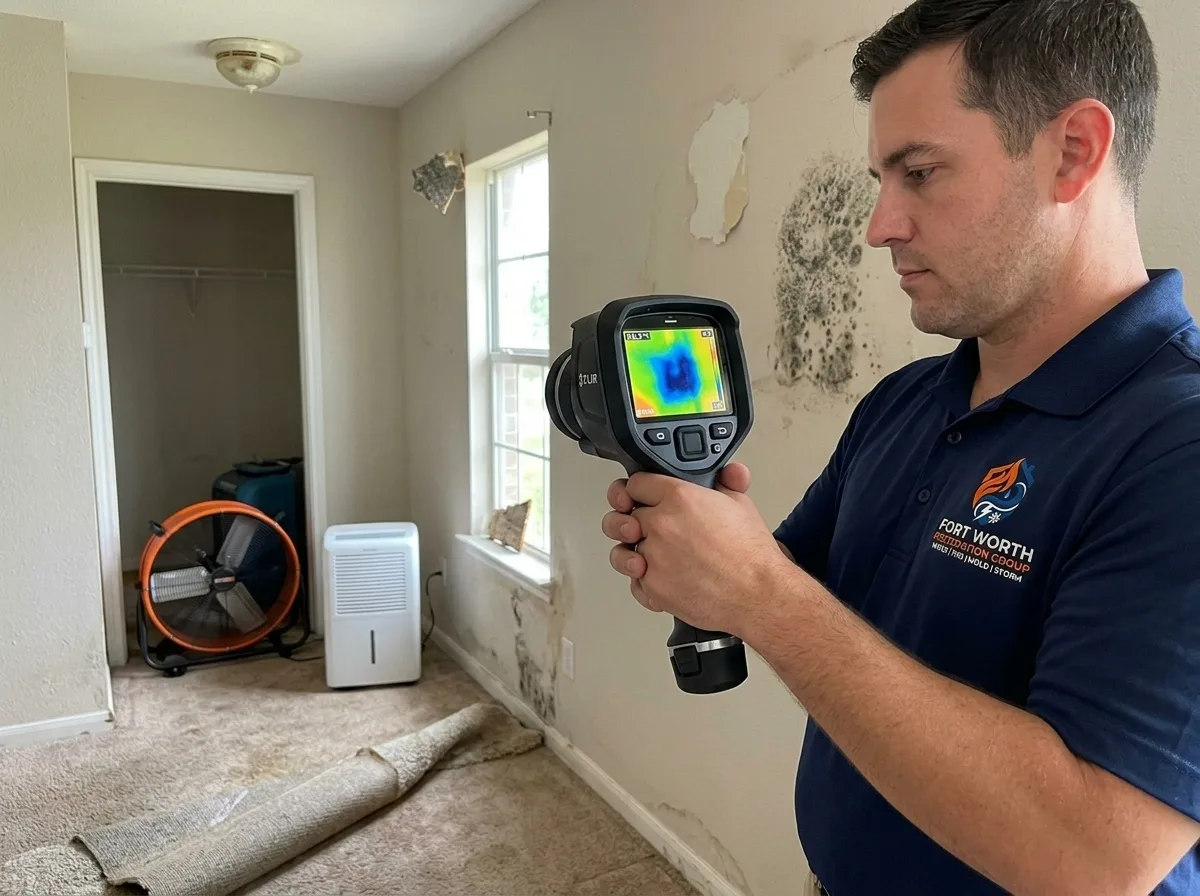
Fort Worth's housing stock splits into two very different moisture profiles, and this page covers both. Older homes near the historic core — neighborhoods like Fairmount, Ryan Place, Berkeley Place, Mistletoe Heights, and the streets around TCU, most built in the early-to-mid 1900s — sit on genuine pier-and-beam foundations with real crawl spaces underneath. The much larger share of the market, built from the postwar years onward, sits on post-tension slab-on-grade foundations, a direct response to the region's expansive clay soils.
Both situations create their own path to mold, just through different mechanics. Crawl spaces trap ground moisture and humidity against wood framing and subflooring. Slab-built homes don't have that void space, but they do have slab perimeters, exterior wall cavities, and areas around plumbing penetrations where moisture from a leak, a grading issue, or condensation can sit against drywall and framing without anyone noticing until a stain or odor shows up.
Pier-and-Beam Crawl Space Mold in Fort Worth's Older Neighborhoods
Ground moisture, limited ventilation, and aging insulation batts that have sagged and started holding water all combine to make a crawl space a persistent moisture environment if it isn't managed. Add in plumbing that sometimes runs beneath the house rather than through it, and there's a real chance for a slow leak to go unnoticed for a while.
Signs typically show up inside the home before anyone looks underneath it: a musty smell most noticeable near floor vents or in a room directly above the affected area, soft spots underfoot, or a cooler, damper feel to one part of the house. A look from below usually confirms visible growth on floor joists or the underside of the subfloor.
Slab-Perimeter and Wall-Cavity Moisture in Slab-Built Homes
Without a crawl space or a below-floor void, moisture in a slab-built home finds a different path — most often exterior grading that slopes toward the foundation instead of away from it, a slow leak at a plumbing penetration through the slab, condensation from an undersized or poorly maintained HVAC system, or a prior water event that dried on the surface but not inside the wall cavity behind it.
It typically presents as staining or bubbling paint low on an exterior wall, a musty smell confined to one room with no obvious source, or baseboards that feel soft or separate from the wall when pressed.
How Remediation Differs Between the Two
Crawl space work is generally accessed from below through the crawl space entry, and can involve addressing ventilation, correcting a vapor barrier where one is present, and treating or replacing affected framing and subfloor material.
Slab-perimeter and wall-cavity work usually means opening the affected section of wall to reach and treat the cavity, removing affected drywall or insulation, and correcting whatever let the moisture in — a plumbing leak, grading, or a condensation source — before the wall is closed back up.
Why the Moisture Source Has to Be Fixed First
Treating visible mold without correcting the source it grew from — poor drainage, an ongoing slow leak, chronic condensation — leaves the same area at risk of the same problem returning. Restoration work is carried out by trained technicians using professional extraction and drying equipment, and identifying the moisture source is treated as part of the job, not an afterthought tacked on at the end.
Residential Considerations
Older pier-and-beam properties sometimes need coordination for structural access — clearing a crawl space entry, accounting for original wiring or plumbing routed through the space, or working around limited headroom. If the moisture is coming from active water intrusion rather than long-standing dampness, that side of the job is handled directly alongside the mold work.
Frequently Asked Questions
How do I know if my house has a crawl space or is slab-on-grade?
If there's a raised foundation with vents around the base and an access door or panel somewhere along the exterior, it's pier-and-beam with a crawl space. Most Fort Worth homes built from the mid-20th century onward sit directly on a concrete slab with no void space underneath.
Can mold in a crawl space affect the air inside my home?
It can, particularly if the crawl space connects to the living area through gaps around plumbing penetrations, ductwork, or flooring seams. That's part of why crawl space moisture is worth addressing rather than leaving alone.
Why does my slab-built home have mold if there's no space underneath it?
Slab construction removes the below-floor void entirely, but moisture can still reach wall cavities and slab perimeters through a plumbing leak, poor exterior grading, or condensation. It's a different mechanism than crawl space moisture, but the same underlying issue — water reaching a spot it shouldn't and not drying out.
Do you need to cut into drywall to fix wall-cavity mold?
Usually, to the extent needed to access and properly treat or remove the affected material and confirm the moisture source is addressed. A trained technician can explain the specific scope for a given wall before any work starts.
Nearby service areas
Crawl Space or Slab-Related Mold in a Fort Worth Home?
Whether it's an older pier-and-beam property or a newer slab-built home, the right fix starts with finding where the moisture is actually coming from.
Speak With a Restoration Team