Commercial Water Damage Restoration
A pipe break, a rooftop unit backup, or a multi-tenant plumbing failure doesn't wait for business hours, and the response to it shouldn't either.
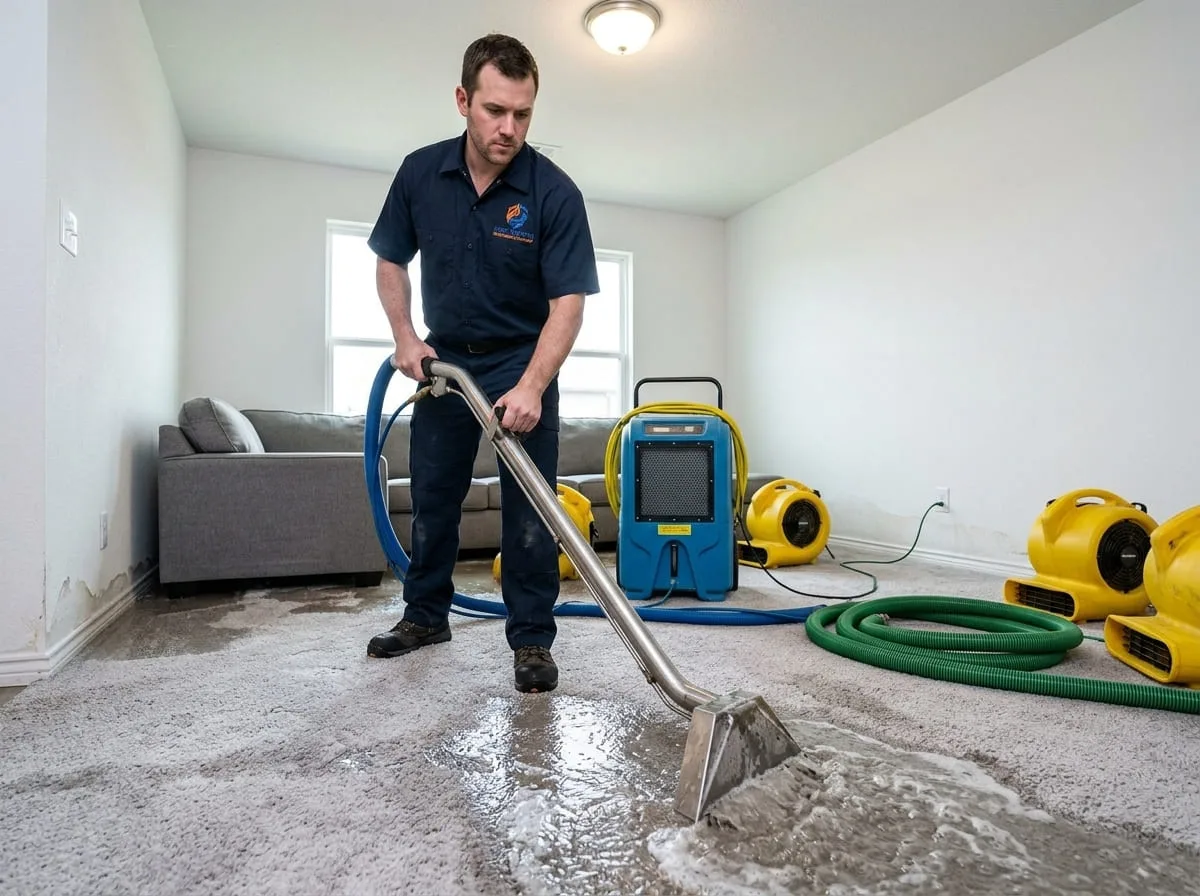
A pipe break in a retail space, a rooftop HVAC unit that backs up during a storm, or a supply line failure in a multi-tenant building doesn't wait for business hours, and neither does the exposure it creates. Inventory, fixtures, flooring, and the ability to keep operating are all on the line the moment water starts moving across a commercial floor.
Commercial losses carry a different set of pressures than a residential one. Tenant coordination, business interruption, and documentation for a commercial claim all run alongside the physical drying and cleanup, and getting all of it right depends on crews who have handled a working building before, not just a house.
Why Commercial Water Losses Move Fast
Large open floor plans, suspended ceilings, and building-wide HVAC systems can spread water across a much wider area than a comparable residential loss, often reaching multiple tenant spaces or floors before it's discovered by staff or a security patrol.
Commercial flooring — carpet tile, VCT, engineered wood, sealed concrete — reacts differently to water than residential flooring, and the wrong initial response can turn a salvageable floor into a full replacement.
Business Interruption and the Cost of Delay
Every day a commercial space is unusable is lost revenue, and for a business paying rent or a mortgage on space it can't use, downtime is often the larger cost of a water loss, not the structural repair itself. Fast extraction and drying are what get a business back to serving customers or clients, which is why commercial response has to move on a different timeline than a routine repair.
Multi-Tenant and Multi-Unit Buildings
In a shared building, water rarely respects a lease line. A leak on an upper floor of a multi-tenant property can affect units or suites that had nothing to do with the source, and a restoration plan has to account for every affected space, not just the one where the leak started.
Property managers dealing with a shared-building loss typically need clear communication with multiple tenants at once, relocation guidance where a unit is temporarily uninhabitable, and documentation that separates responsibility by unit for insurance purposes.
24/7 Response, Including Off-Hours Emergencies
Water damage doesn't check the clock, and a loss that starts at 2 a.m. in an office building or restaurant kitchen needs the same urgency as one that happens at 2 p.m. Whether the call comes in during business hours or on a Sunday night, it's routed to restoration crews equipped for 24/7 emergency response — including the after-hours calls commercial properties disproportionately generate, since so many commercial leaks are discovered by an alarm, a security sweep, or the first person in the next morning.
The Restoration Process for Commercial Properties
A commercial response typically includes extraction, moisture mapping across a larger footprint than a residential loss, containment to keep unaffected areas of the building operating where possible, and drying equipment sized to commercial volumes rather than a single room. Coordination with property management or ownership continues throughout, not just at the start.
Not every commercial material can be saved. Saturated ceiling tile, some flooring adhesives, and certain wall systems typically have to be removed rather than dried, and an honest scope set early avoids surprises mid-project.
Before Crews Arrive
A few steps can limit the spread of damage and speed up the response once crews are on site:
- Shut off the water main or the affected fixture's supply if it's safe and accessible
- Notify tenants or occupants of affected units as soon as possible
- Keep foot traffic away from wet flooring and any area near electrical equipment
- Photograph the damage and affected inventory or fixtures before cleanup begins
- Avoid running business equipment located near standing water
Frequently Asked Questions
Does commercial water damage restoration work outside business hours?
Yes. Commercial emergencies are handled around the clock, since a business affected overnight or over a weekend needs a response before the next shift or the next opening, not after.
Who handles multiple tenants affected by the same leak?
The restoration professionals typically coordinate directly with property management or ownership, documenting each affected unit or suite separately so the paperwork lines up with however responsibility and insurance coverage end up being sorted out.
Can a business stay open during water damage restoration?
Sometimes, depending on which areas are affected. Containment can occasionally isolate the work area so unaffected parts of a building keep operating, though a badly affected space usually needs to close, at least temporarily, for safe and efficient drying.
Can commercial flooring be saved after a water loss?
It depends on the material and how long it sat wet. Some carpet tile and VCT can be cleaned and dried in place; adhesive failures, delaminated engineered wood, and long-saturated substrates typically need replacement.
Do restoration crews work with commercial insurance claims?
Insurance documentation — moisture readings, photos, and a scope of work — is provided to support whatever claim process a business's commercial policy requires.
Downtime Costs More Than the Repair
A fast, coordinated response gets a commercial property back to normal operations sooner.
Request Water Damage Service