Mold Testing & Sampling in Fort Worth
Air and surface sampling used to confirm the presence and extent of mold, or to document that a space is clear after remediation.
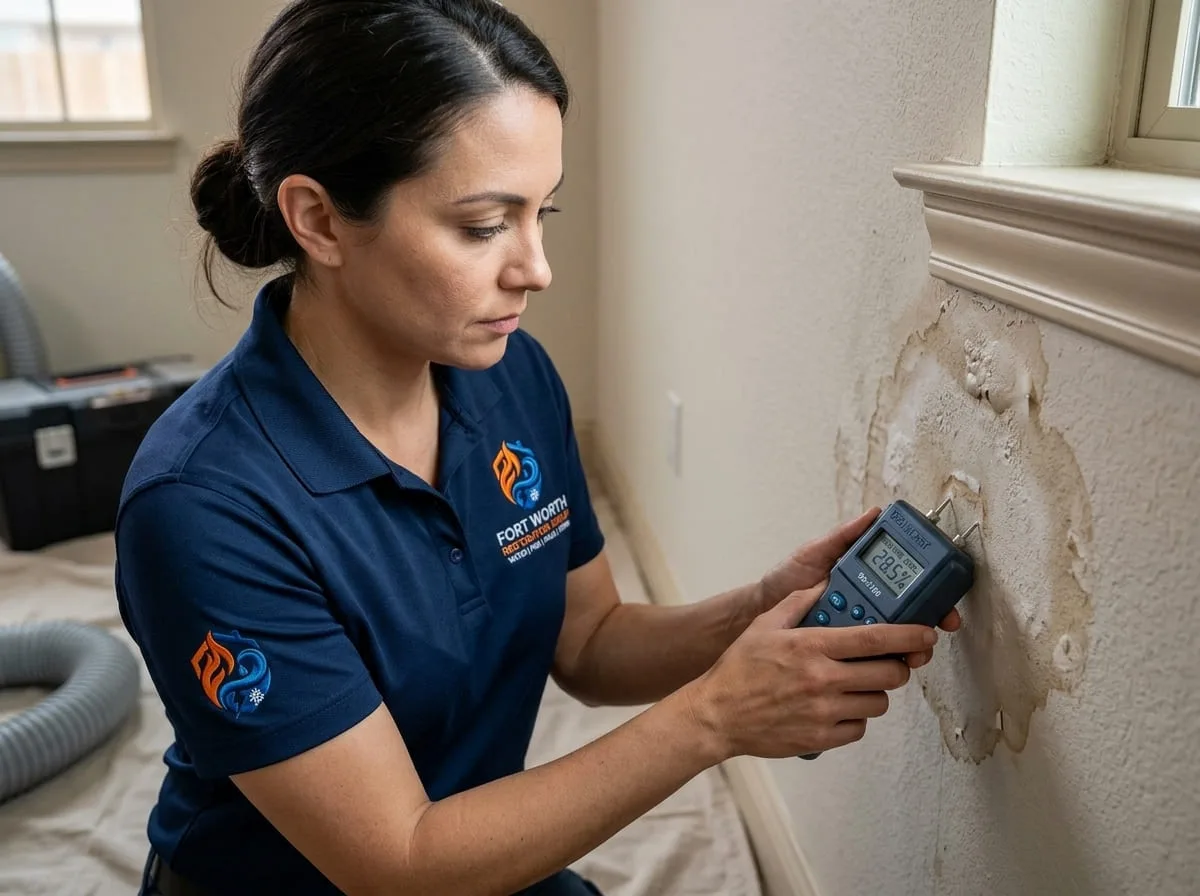
Mold testing isn't always necessary, but it earns its place in specific situations — when there's a musty smell with no visible source, when a property is changing hands and documentation matters, or when confirming a space is clear after remediation is worth more than a visual check alone. This page covers how air and surface sampling generally work and when they're actually useful.
Testing is typically paired with a mold inspection rather than done on its own, since the inspection identifies where sampling will actually add useful information.
Air Sampling
Air sampling collects a measured volume of indoor air onto a sample cartridge or slide, which is then sent to an independent laboratory for analysis. The result is compared against a sample taken from outdoor air or an unaffected area of the same property, giving a baseline for what's normal versus elevated for that specific location. Air sampling is most useful when there's a suspected problem without visible growth — behind a wall, above a ceiling, or in ductwork.
Surface Sampling
Surface sampling — typically a swab or tape lift from a specific spot — identifies what's growing on a particular surface. It's useful for confirming that a visible spot is actually mold rather than another type of staining, or for distinguishing between different areas of growth found on a property.
Where Samples Are Analyzed
Samples are sent to an independent, third-party laboratory rather than analyzed on-site, which keeps the testing separate from the remediation work itself. Turnaround time varies by lab and by how the sample is submitted, so it's worth asking about the expected timeline when a sample is collected. The professionals collecting samples follow consistent collection procedures so results can be fairly compared against a baseline.
What Results Do and Don't Tell You
Lab results describe what was found in a sample and at what relative level compared to a baseline. They're one input into a remediation decision, not a stand-alone verdict — the physical inspection findings, the extent of visible growth, and the moisture source all factor in alongside the lab data.
Testing Before vs. After Remediation
Pre-work testing helps establish a baseline and confirm the scope of a job. Post-remediation sampling is used as part of clearance to help confirm the space is back within a normal range before it's reopened — the post-remediation verification page covers that step in more detail.
Frequently Asked Questions
Do I need to test for mold, or can it just be remediated?
If mold is visible and the moisture source is clear, remediation can often proceed without testing. Testing adds the most value when there's no visible growth but a suspected problem, or when documentation is needed for a transaction, dispute, or clearance.
How long do lab results take?
It varies by laboratory and how the sample is submitted, so it's worth asking about expected turnaround when the sample is collected rather than assuming a fixed timeline.
Can I do my own mold test with a kit from a hardware store?
Consumer test kits can pick up mold spores, but so can a normal, unaffected home, since spores are present in ordinary air everywhere. Without a proper baseline comparison and professional interpretation, the results are often difficult to act on.
Does a clean air sample mean I don't have a mold problem?
Not necessarily on its own — a single air sample reflects conditions at that moment in that location. It's typically interpreted together with the physical inspection rather than as a stand-alone answer.
Nearby service areas
Need to Confirm What's Actually There?
Sampling adds real value in the right situation — an inspection first will tell you if this is one of them.
Request Water Damage Service