
Mold After Water Damage in Fort Worth
If mold has developed after a leak, flood, or slow-drying water event, the fix starts with resolving the moisture problem completely — not just cleaning what's visible.
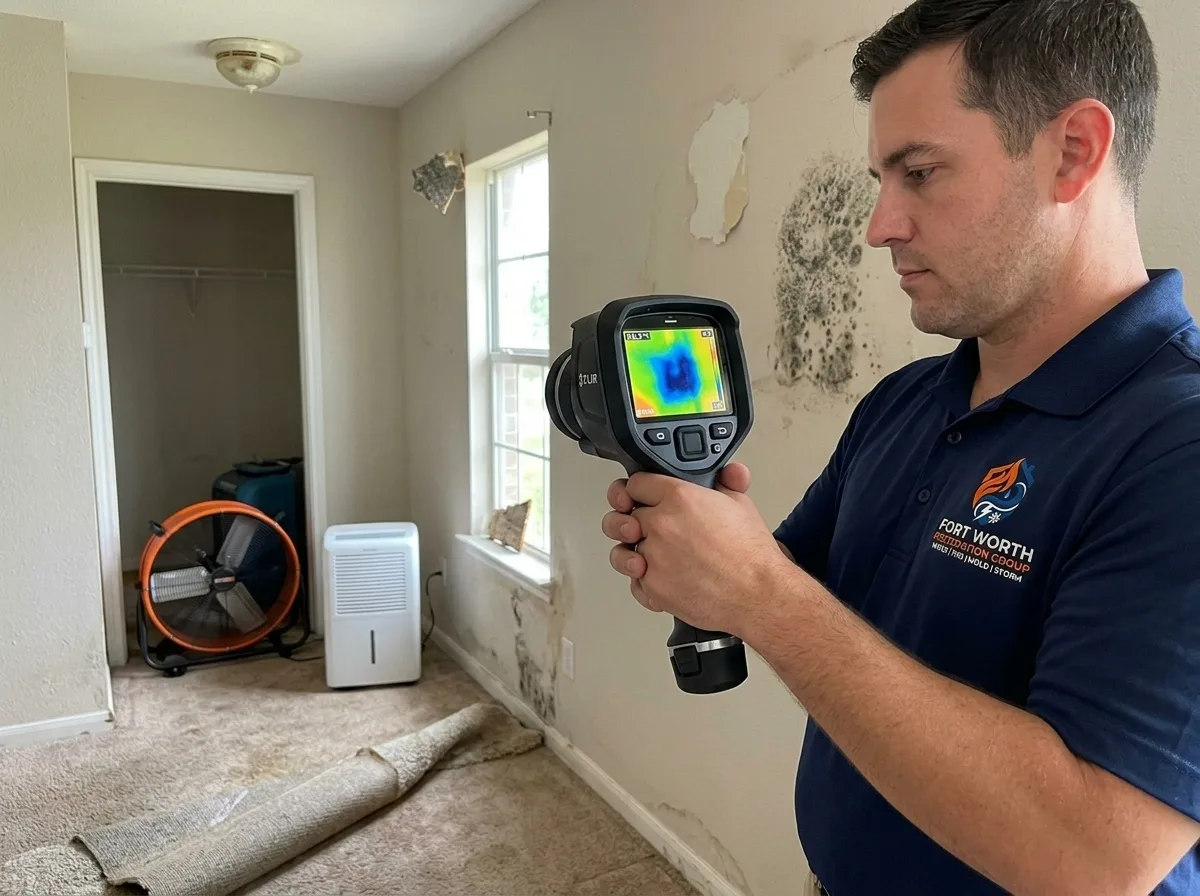
Finding mold after a water event is one of the most common calls in Fort Worth restoration — a leak that took a few days to notice, a flooded room that didn't get fully dried, or a slow drip inside a wall that finally showed itself as a stain and a smell. In most cases, the mold is a downstream symptom of a water problem that wasn't caught or dried fast enough, which means the water side of the job matters as much as the mold side.
This page covers what typically happens when mold shows up after water damage, why it happens, and what a proper response looks like. If water is still actively present in the property, that gets addressed first — extraction and drying stop the problem from getting worse while the mold assessment and remediation plan come together.
Why Mold Follows Water Damage
Mold needs moisture, an organic food source, and time. Wet drywall paper, wood framing, insulation, and dust on a duct or coil supply the second part; a water event that isn't fully extracted and dried supplies the first. Under warm, humid conditions — which describes a Fort Worth summer for months at a stretch — visible growth can begin within a couple of days once materials stay wet.
The most common paths to this call are an unnoticed leak behind a cabinet or appliance, a water event that was cleaned up on the surface but not dried underneath, or humidity that got trapped behind baseboards, under flooring, or inside a wall cavity long after the original spill looked handled.
Signs the Water Event Left a Mold Problem Behind
A musty odor that doesn't clear with ventilation is usually the first sign, often before anything is visible. Discoloration on drywall, baseboards, or a ceiling that appears after a water event — sometimes weeks later — is another common indicator, along with soft or bubbling paint and drywall near where the water sat.
- Musty odor that persists after the area was supposedly dried
- New discoloration on drywall, trim, or ceiling near the original water event
- Soft, bubbling, or bowed drywall or paint
- Visible fuzzy or spotted growth on previously wet materials
- A return of dampness or smell in an area weeks after cleanup
What the Process Looks Like
The starting point is an assessment of the moisture source and how far it spread, since a water event that looked contained on the surface can travel further than expected inside a wall or under flooring. From there, the area is contained, unsalvageable porous materials are removed, remaining surfaces are cleaned and treated, and the space is dried and monitored before containment comes down.
We connect property owners with qualified, insured and bonded restoration specialists who handle both the water extraction and the mold remediation, so the same team understands the full history of the loss rather than picking up partway through.
What Can Usually Be Saved vs. What Typically Can't
Hard, non-porous surfaces — tile, some finished wood, glass, metal fixtures — can often be cleaned and kept if the problem is caught reasonably early. Porous materials that stayed wet for an extended period, like drywall, insulation, carpet padding, and particleboard cabinetry, more often need to be removed and replaced rather than cleaned in place. The exact line depends on how long materials were wet and how contaminated the water was, which is part of what the initial assessment establishes.
Before Restoration Professionals Arrive
There's a short list of things that help and a short list of things that make it worse. Avoid disturbing visible growth by scrubbing or dry-brushing it, since that can release spores into the air rather than contain them. Keep pets and kids out of the affected area, and don't run the HVAC system if there's any chance growth has reached ductwork.
- Photograph the affected area for your own records and any insurance claim
- Keep the area closed off from foot traffic
- Increase ventilation to unaffected rooms if it's safe to do so
- Avoid using bleach on porous materials as a fix — it doesn't reach mold growing inside the material
- Don't run the HVAC system if ductwork may be involved
Frequently Asked Questions
How soon after water damage can mold appear?
In favorable conditions — warm, humid, and materials left wet — visible growth can begin within a couple of days, which is faster than many people expect and part of why quick extraction and drying matter.
If the water is already dried, why do I still have a mold smell?
A musty odor after drying usually means moisture reached somewhere the drying process didn't fully cover — inside a wall cavity, under flooring, or in insulation. That's typically a sign the area needs a closer look rather than more time.
Will my insurance cover mold that developed after a covered water loss?
It depends on the policy and the timeline, but mold that develops as a direct result of a sudden, covered water event is more commonly covered than mold from a long-term or previously known leak. The restoration partner assigned to the job can help document the connection between the two.
Do you handle the water damage and the mold in the same job?
Yes — since one is usually the direct cause of the other, addressing both together, with the same restoration team, is the standard approach rather than treating them as separate jobs.
Water Damage and Mold Are Usually the Same Call
Getting the moisture handled quickly is the best way to stop a small mold problem from becoming a larger one.
Get Emergency Water Removal