
Residential Mold Remediation in Fort Worth
Mold assessment and remediation for Fort Worth houses, town homes, and apartments, handled with attention to occupied living space and family schedules.
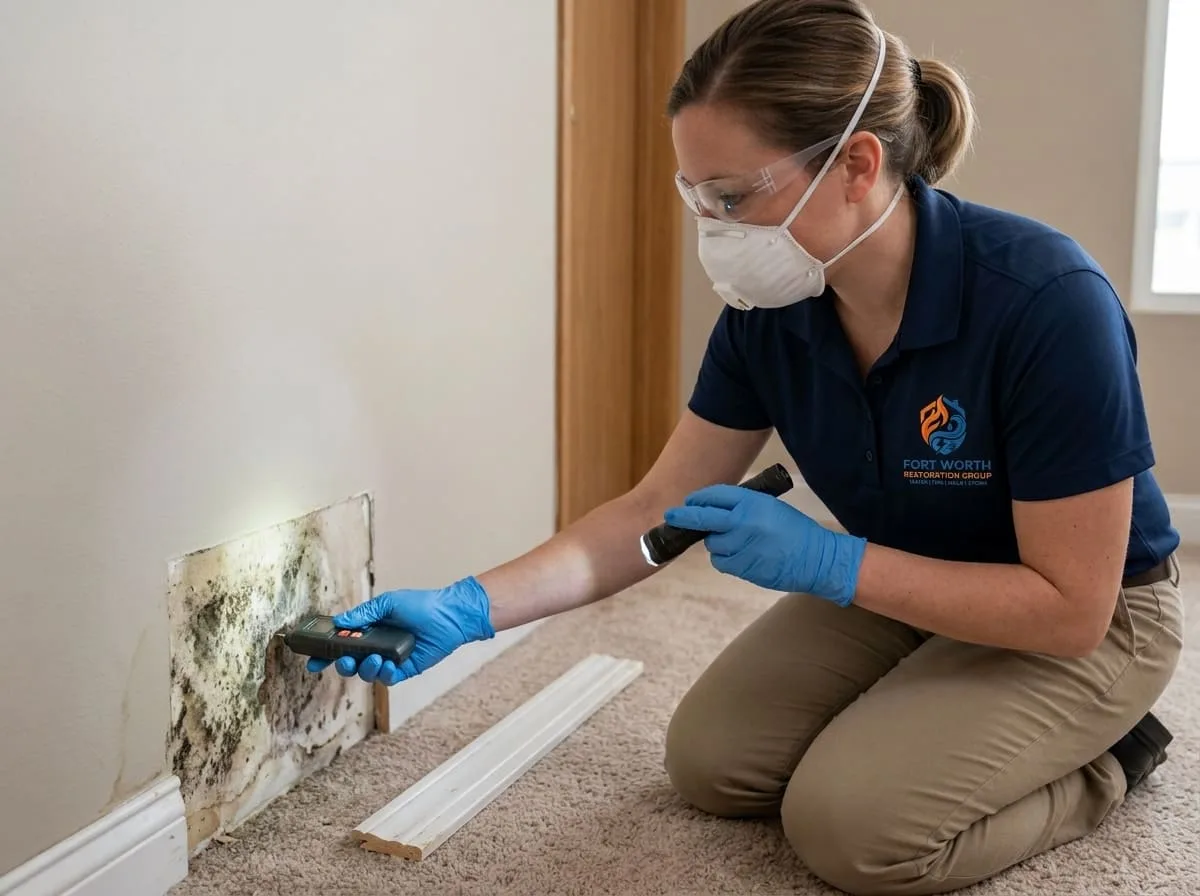
Mold in a home is a different experience than mold in a commercial building — it's where people sleep, cook, and keep their belongings, and most homeowners are dealing with it for the first time. Fort Worth homes run from early-1900s pier-and-beam construction near the historic core to postwar slab-built ranch houses to newer subdivisions on the edges of the metro, and each has its own common moisture pattern, but the response is built around the same goal: find the moisture, remove what can't be salvaged, and confirm the space is clean before calling it finished.
This page covers what residential mold remediation typically involves, from the first inspection through the work itself.
Common Causes in Fort Worth Homes
A handful of causes show up again and again across the area's housing stock.
- Aging or original galvanized supply lines in mid-century homes failing slowly rather than bursting outright
- Appliance connections — washing machines, dishwashers, water heaters — leaking behind or under the unit
- Roof leaks after hail or wind events
- Condensation from an undersized or poorly maintained HVAC system
- Bathroom exhaust fans venting into an attic instead of outside
What a Home Inspection Typically Finds
Visible discoloration on drywall or a ceiling, a musty odor concentrated in one or two rooms, and moisture readings elevated near baseboards or under flooring are the usual findings. Sometimes growth is found inside cabinetry or a closet along an exterior wall, where airflow is limited and a small amount of moisture has had time to sit undisturbed.
Living in the Home During Remediation
Many residential jobs can proceed with the rest of the home occupied, containing only the affected room or rooms with plastic sheeting and, where used, negative air equipment. Larger jobs involving multiple rooms or a whole-house humidity issue sometimes call for temporary relocation for part of the work.
Work performed by licensed and insured restoration professionals typically includes walking the homeowner through which rooms are affected and what living around the work will look like day to day.
What Usually Gets Removed vs. Cleaned
Carpet and pad are usually replaced if they've been wet for an extended period, since padding holds moisture and is difficult to fully dry in place. Hardwood is sometimes salvageable if the problem is caught early — see the hardwood and flooring water damage page for more on that distinction. Cabinetry sometimes survives depending on the material and how long it was exposed to moisture.
Before the Team Arrives
A few precautions in the meantime help keep the situation from getting worse.
- Keep the area closed off from kids and pets
- Avoid running the HVAC if growth may involve ductwork
- Don't paint over or try to seal visible growth
- Take photos for your own records and any insurance claim
Frequently Asked Questions
Do we need to move out of the house during mold remediation?
Not usually, for a contained, single-room job — the affected area is sealed off and the rest of the home stays livable. Larger jobs involving multiple rooms, HVAC systems, or extensive moisture damage sometimes require temporary relocation for part of the work, which would be discussed during the assessment.
How much does residential mold remediation cost?
It depends entirely on the extent of the growth, what materials are affected, and how much of the moisture source needs to be corrected. An inspection is the only reliable way to get an accurate scope and estimate for a specific home.
Will my homeowners insurance pay for this?
Sometimes, depending on the cause. Mold connected to a sudden, covered water event has a better chance of coverage than mold from a long-standing, previously known leak. The restoration partner assigned to the job can help with documentation, but the insurer makes the coverage decision.
How do I stop it from coming back after remediation?
The remediation itself should include correcting whatever caused the moisture in the first place. Beyond that, keeping indoor humidity reasonable, fixing leaks promptly, and making sure bathroom and kitchen exhaust fans vent outside rather than into an attic all reduce the odds of a repeat.
Nearby service areas
Mold Showing Up in Your Fort Worth Home?
An inspection is the fastest way to find out what you're actually dealing with and what it will take to fix it.
Request Water Damage Service