Commercial Mold Remediation in Fort Worth
Mold assessment and remediation for Fort Worth offices, retail spaces, restaurants, and multi-tenant properties, scheduled around business operations wherever possible.
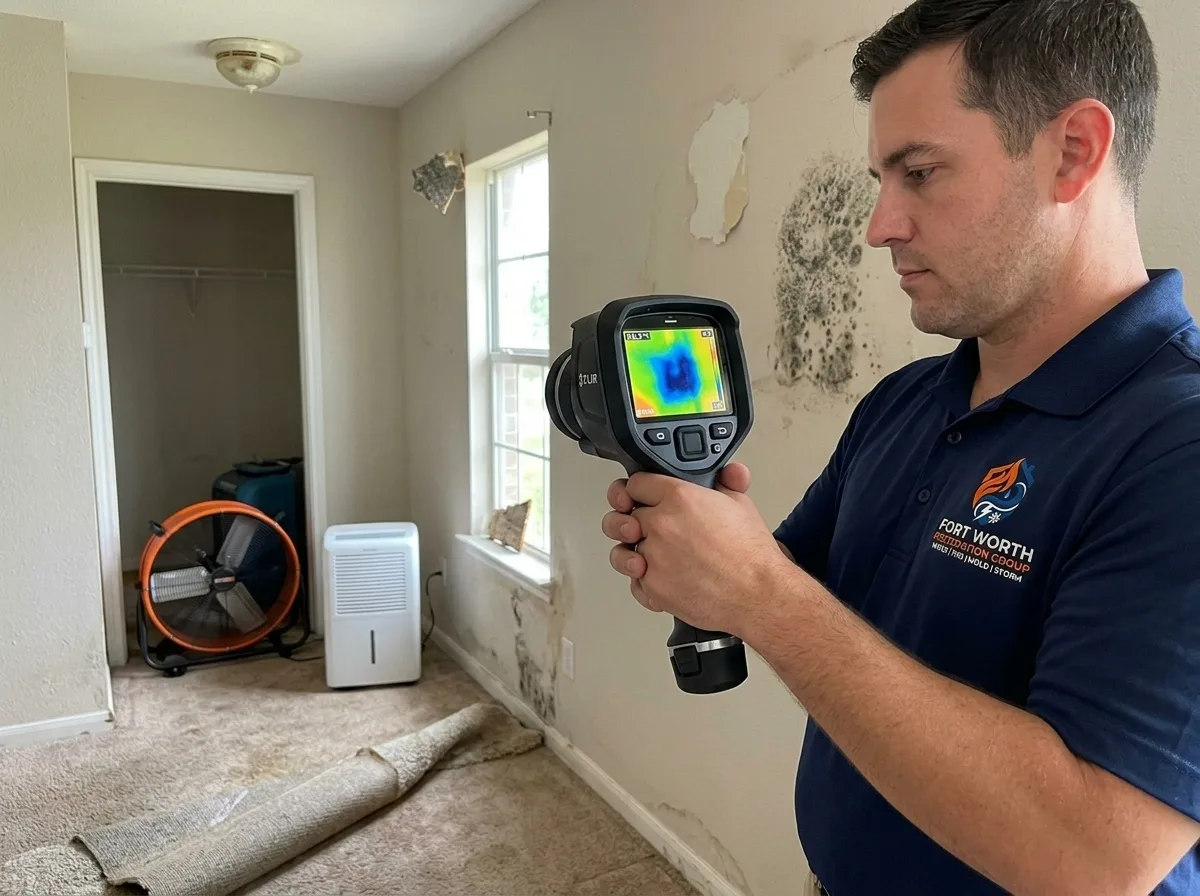
Mold in a commercial property carries a different set of pressures than a residential job — tenant notifications, lease obligations, health department considerations for food-service spaces, and the operational cost of closing part or all of a business during the work. Fort Worth's commercial buildings run the full range, from older brick storefronts downtown to newer slab-built retail and office space in the northeast Tarrant corridor, and mold shows up in all of them for largely the same reason: moisture that sat somewhere too long.
This page covers how commercial mold remediation is typically approached — assessment, containment that accounts for an occupied or partially occupied building, and coordination with property management or ownership throughout.
Common Sources in Commercial Buildings
Most commercial mold calls trace back to one of a handful of recurring sources rather than something unusual.
- Roof leaks above suspended ceilings that go unnoticed for a while
- HVAC condensation and poorly maintained rooftop units
- Plumbing leaks inside shared walls or above ceiling tiles
- Past water damage that was cleaned up but not fully dried
- High-humidity areas such as commercial kitchens or mechanical rooms
Working Around an Occupied Business
Containment can often isolate the affected area so the rest of a building keeps operating, with work scheduled after hours or during slower periods where the scope allows. That decision gets made during the initial assessment, based on where the mold is and how the building's systems are laid out.
Our restoration partners follow recognized industry standards for containment, which matters as much for protecting occupied areas of a building as it does for the space actually being remediated.
Multi-Tenant and Shared-Wall Considerations
A moisture or mold issue in one unit can originate from a neighboring unit or a shared plumbing chase, which raises questions property managers often need answered for lease or liability purposes. Documentation of the assessment and the completed work can support those conversations, even though the lease itself is between the property owner, the tenant, and whoever holds decision-making authority — not the restoration team.
What the Process Looks Like for a Business
An initial assessment establishes the scope and likely timeline, which gets reviewed with whoever is making the decision — owner, property manager, or tenant depending on the lease. From there, containment goes up, remediation proceeds, and clearance confirms the work is complete, with documentation available for insurance or lease purposes afterward.
Commercial Water Damage and Mold Are Often Linked
A mold call in a commercial space often traces back to an unresolved water issue — sometimes one that was addressed elsewhere but not fully dried out, or a leak that went unnoticed over a weekend when the building was empty. Commercial water damage restoration and commercial mold remediation are frequently the same underlying job.
Frequently Asked Questions
Can part of my business stay open during mold remediation?
Often, yes. Containment can typically isolate the affected area so the rest of the building continues operating, though the specifics depend on the building's layout, the location of the mold, and shared HVAC or duct systems.
Who is responsible for mold remediation in a multi-tenant building — the tenant or the property owner?
That depends on the lease and where the moisture originated. It's a question for property management or a leasing attorney rather than the restoration team, but documentation of the assessment and remediation can support whatever that conversation requires.
Do you provide documentation for insurance or health department purposes?
Documentation of the assessment, scope of work, and completed remediation is standard practice and can be provided to support insurance claims or other requirements a business may have.
How is commercial mold remediation scheduled to minimize disruption?
Where the scope allows, work is often scheduled after hours or during slower business periods, and containment is set up to keep the rest of the space usable. That gets worked out during the initial assessment.
Related services
Nearby service areas
Mold Affecting a Fort Worth Business?
Get an assessment and a clear scope of work before deciding how to handle it operationally.
Request Water Damage Service