Black Mold Remediation in Fort Worth
Dark, discolored mold growth removed and remediated by trained professionals, with the moisture source identified and corrected as part of the job.
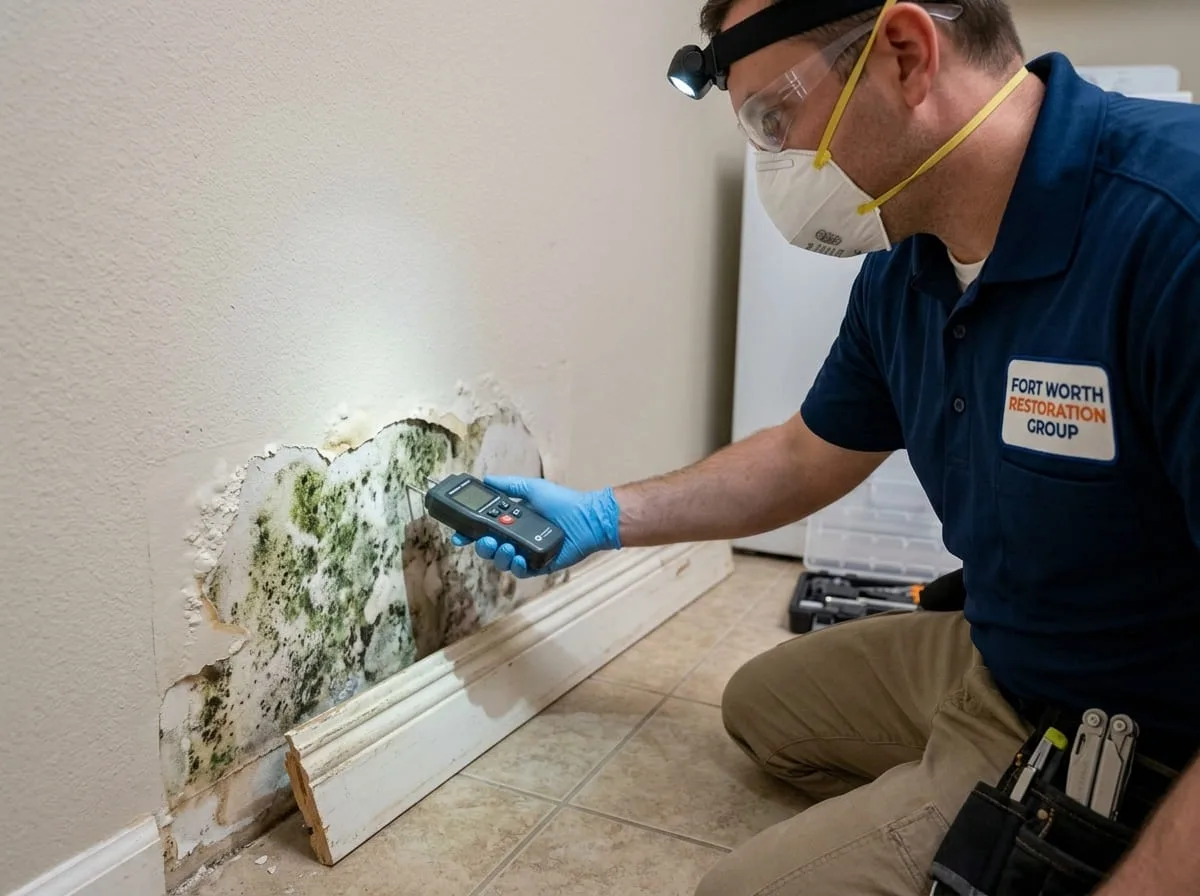
"Black mold" is the term most people reach for when they find dark, spotted growth on drywall, wood, or grout — and it's worth being direct about what that term does and doesn't tell you. Several different mold species can appear black or dark green, and telling them apart by sight alone isn't reliable. What can be said with confidence is that any mold growth, regardless of color, means moisture has been present long enough for it to establish, and it should be assessed and remediated properly.
This page covers how dark mold growth is typically approached in a Fort Worth home or business — inspection, safe containment and removal, and confirming the moisture source has been corrected so it doesn't come back.
Why Color Alone Doesn't Identify the Mold
Visual color is not a reliable way to identify a specific mold species. If species identification matters for a particular situation, that requires laboratory analysis of a sample rather than a visual assessment. What matters more for remediation purposes is where it's growing, how far it has spread, and what has kept the area damp long enough for it to take hold.
What to Do — and Not Do — If You Find It
The instinct is often to scrub it or spray something on it right away. Resist that. Disturbing dry mold growth — scrubbing, dry-brushing, or aiming a fan directly at it — can release spores into the air rather than contain them.
- Limit access to the affected area until it's assessed
- Photograph the growth for documentation
- Ventilate surrounding, unaffected rooms if it's safe to do so
- Don't apply bleach to porous materials as a fix — it doesn't reach growth inside the material
- Don't sand, cut, or disturb affected drywall without proper containment first
General Health Considerations
Mold exposure affects people differently, and individuals with allergies, asthma, or compromised immune systems may be more sensitive to any type of mold growth. Anyone with specific health concerns about mold exposure should speak with a physician or refer to guidance from a public health authority such as the CDC or EPA, rather than relying on a remediation contractor for medical advice.
From a remediation standpoint, the approach — containment, removal, drying, and correcting the moisture source — is largely the same regardless of the mold's color or species.
The Remediation Process
Work typically starts with containing the affected area using plastic sheeting and, where appropriate, negative air equipment to keep spores from spreading to the rest of the property during removal. Affected porous materials are removed, remaining surfaces are cleaned and treated, and the space is dried before containment comes down.
Access to IICRC-certified restoration expertise means containment and removal follow established industry practice rather than guesswork about what's actually needed.
Commercial and Residential Properties
The underlying approach is the same in a home or a business — assess, contain, remove, dry, verify — but scale and occupancy change how the work is scheduled and staged. A commercial property with tenants or customers to consider often needs more coordination around containment and timing.
Frequently Asked Questions
Is black mold more dangerous than other types of mold?
There's no reliable way to determine a mold's specific health risk just by its color. Any mold growth should be treated seriously and remediated properly, but claims about a particular color being uniquely dangerous go beyond what visual identification can actually tell you.
Do I need lab testing to know if it's toxic black mold?
Species identification requires laboratory analysis of a sample rather than a visual check. For most remediation purposes, though, the response is similar regardless of species — contain it, remove the affected material, and fix the moisture source.
Can I remove small areas of dark mold myself?
A very small area on a hard, non-porous surface is sometimes manageable with routine cleaning. Anything on drywall, wood, or another porous material, anything covering more than a small area, or anything you're not confident about is worth a professional assessment first.
Will it come back after remediation?
It can, if the underlying moisture source isn't fully corrected. That's why identifying and fixing whatever caused the dampness — a leak, poor ventilation, condensation — is treated as part of the remediation, not a separate step.
Nearby service areas
Found Dark Mold Growth in a Fort Worth Property?
Proper containment and removal starts with an accurate assessment, not guesswork about what you're looking at.
Request Water Damage Service