
Richland Hills Water Damage Restoration
Richland Hills is its own small city, fully surrounded by North Richland Hills, and emergency water extraction is dispatched there 24 hours a day.
Sitting at the intersection of State Highways 26 and 183, about eight miles northeast of downtown Fort Worth, Richland Hills has stayed compact for most of its history — its population has held in roughly the same range, around 8,000 residents, for decades rather than expanding the way many surrounding suburbs did. That stability means most of the city's housing dates to its original World War II-era and postwar growth, putting a meaningful share of homes in the same older bracket as the region's other mid-century suburbs: aging supply lines, original fixtures, and the specific plumbing failure points that come with a house built before modern materials were standard.
The city's small footprint also means it has less undeveloped land than its neighbors, so growth over the decades has come from redeveloping and updating existing lots rather than large new subdivisions — one more reason the housing stock skews toward an older, more established profile than a typical fast-growing Tarrant County suburb.
Water Damage Restoration in Richland Hills
In a city built out mostly during one general era, water damage calls tend to follow a familiar pattern. Galvanized steel supply lines from that period corrode internally over the decades until a section narrows enough to fail outright, usually without any warning beyond a drop in water pressure or a stain that appears seemingly out of nowhere on a ceiling or wall. Because Richland Hills is such a small, dense city, a leak in one home can also affect an adjacent property faster than it might on a larger lot.
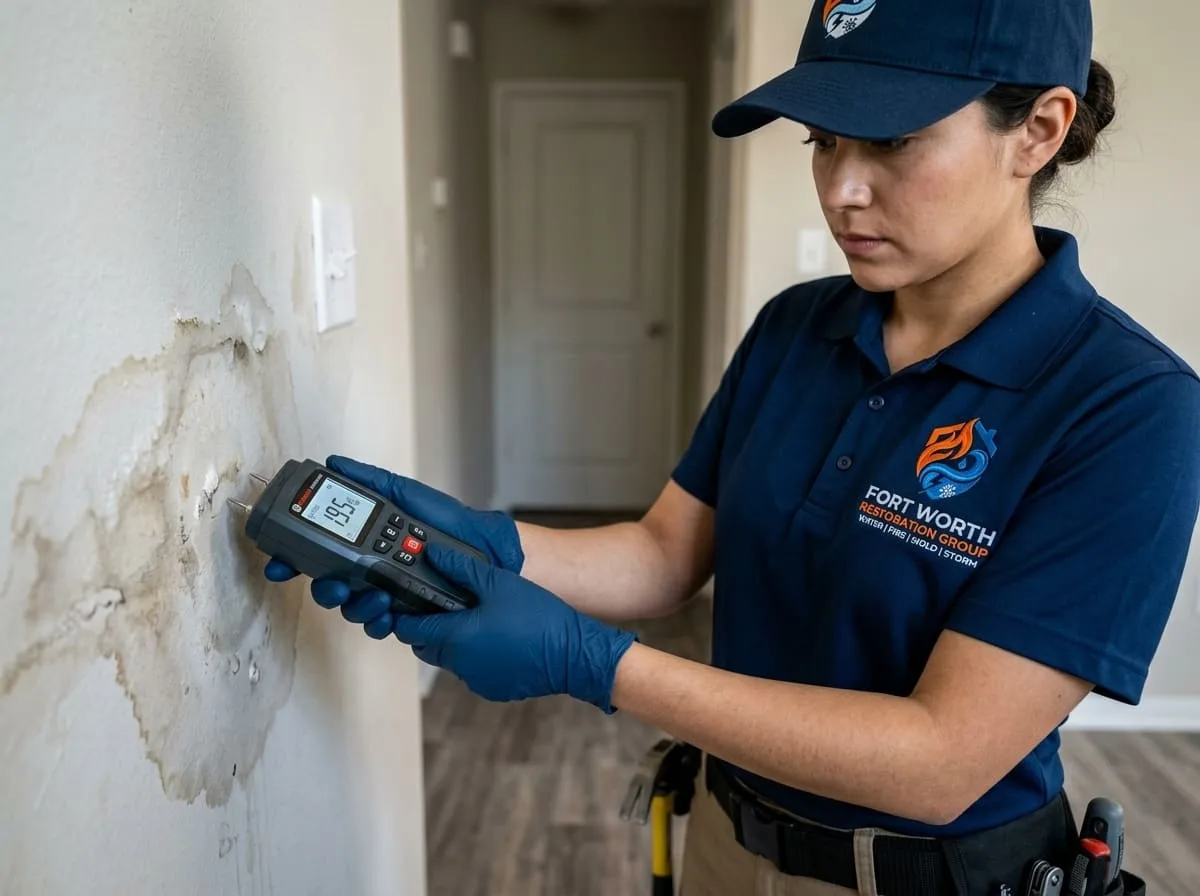
We connect property owners with qualified, insured and bonded restoration specialists who extract standing water first, then map how far it traveled using moisture meters before any drying equipment goes in. Air movers and dehumidifiers dry framing, drywall and flooring in place wherever that's realistic, with moisture levels checked over several days to confirm the structure is actually dry rather than just dry on the surface.
Fire Damage Restoration in Richland Hills
An older home that catches fire often ends up with smoke and soot damage reaching well beyond the room where the fire started, since smoke travels through duct work, attic space and wall cavities far more easily in an older structure. Soot removal and smoke cleanup are covered in detail on the fire damage restoration hub, alongside emergency board-up for any structure left open to the weather.
Given how close together homes sit on many Richland Hills lots, a fire that starts in one house can also leave a neighboring property with smoke exposure even without direct fire damage — something worth checking for even when the visible damage is limited to a single home.
Mold Remediation in Richland Hills
A plumbing leak that goes unnoticed for even a short time in an older, tightly built home can turn into a mold problem faster than expected, particularly during the long, humid North Texas summer months. Mold inspection and mold after water damage are both explained on the mold remediation hub for property owners trying to understand what an inspection actually involves.
Richland Hills Water Damage FAQs
Is Richland Hills the same as North Richland Hills?
No. Richland Hills is a small, separate city that predates its much larger neighbor, North Richland Hills, and the two have always had their own city governments. This page covers service specifically for the City of Richland Hills.
Why do older Richland Hills homes have more plumbing failures?
Much of the city's housing dates to its original World War II-era and postwar growth, which means a real share of homes are still on original galvanized steel supply lines. That type of pipe corrodes from the inside over decades, a well-documented failure point in homes of that era across North Texas.
What happens if water sits inside a home overnight?
The damage gets meaningfully worse. Materials that could have been dried in place after a few hours of exposure often need to be removed after a full night — drywall begins to soften and wick moisture upward, and the conditions for mold growth start developing well before the 48-hour mark commonly cited for microbial concerns.
Nearby Service Areas
Fast Help for Richland Hills Water Damage
In a small, older city like this one, fast extraction keeps a single-home leak from becoming a bigger repair.
Speak With a Restoration Team